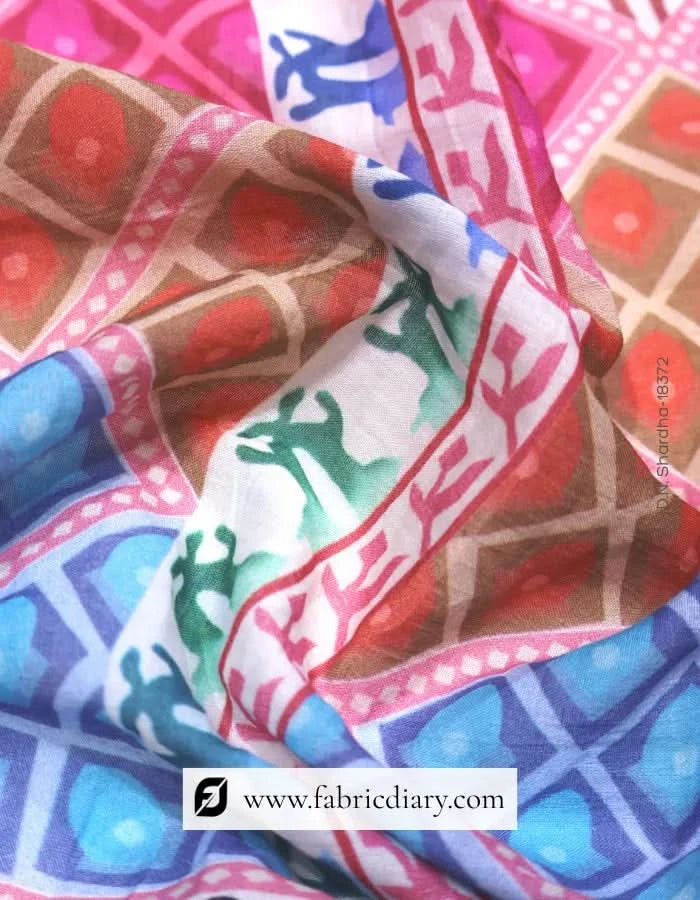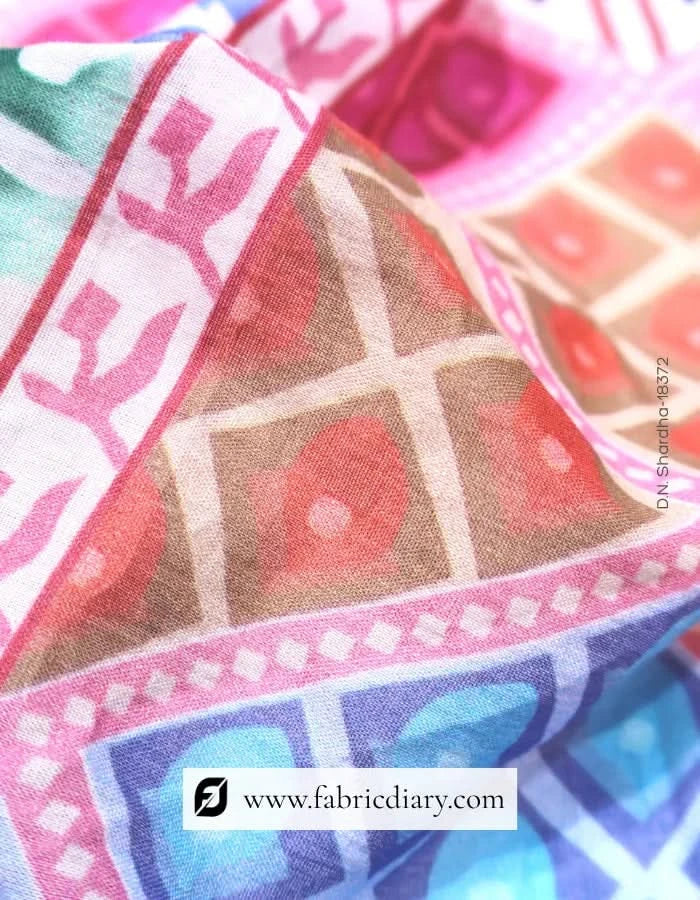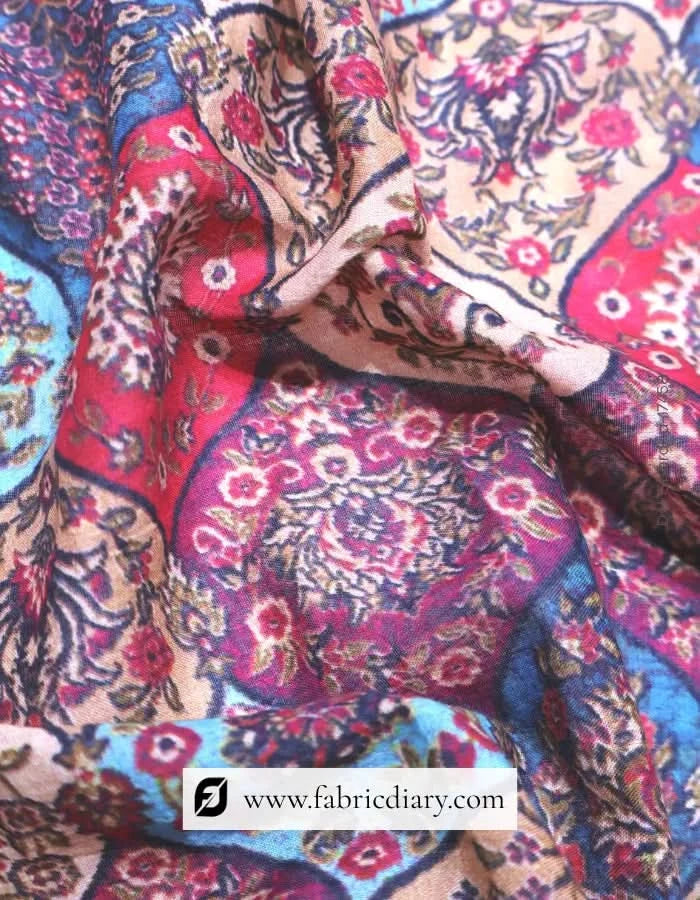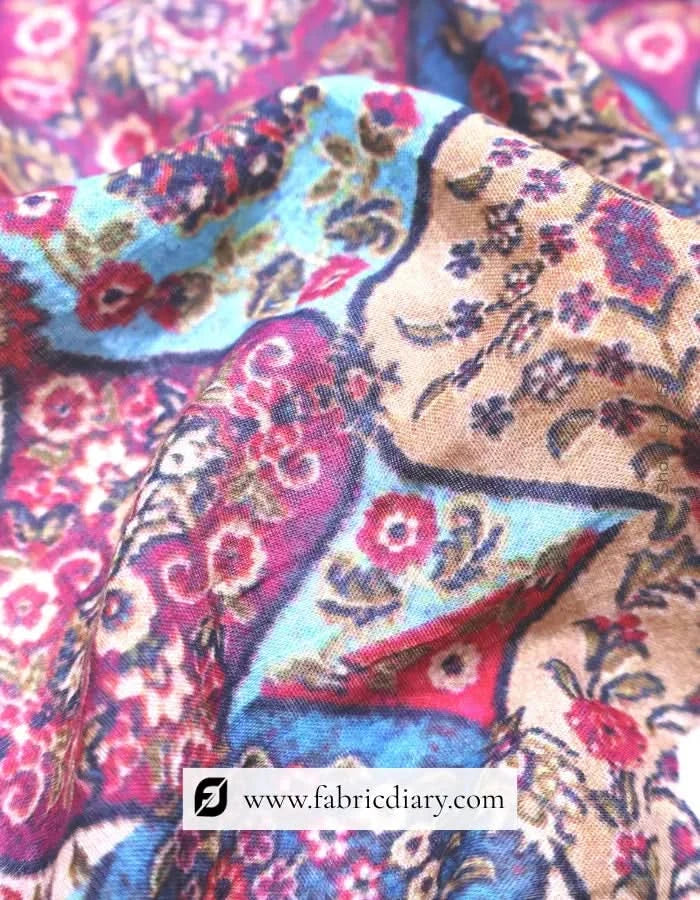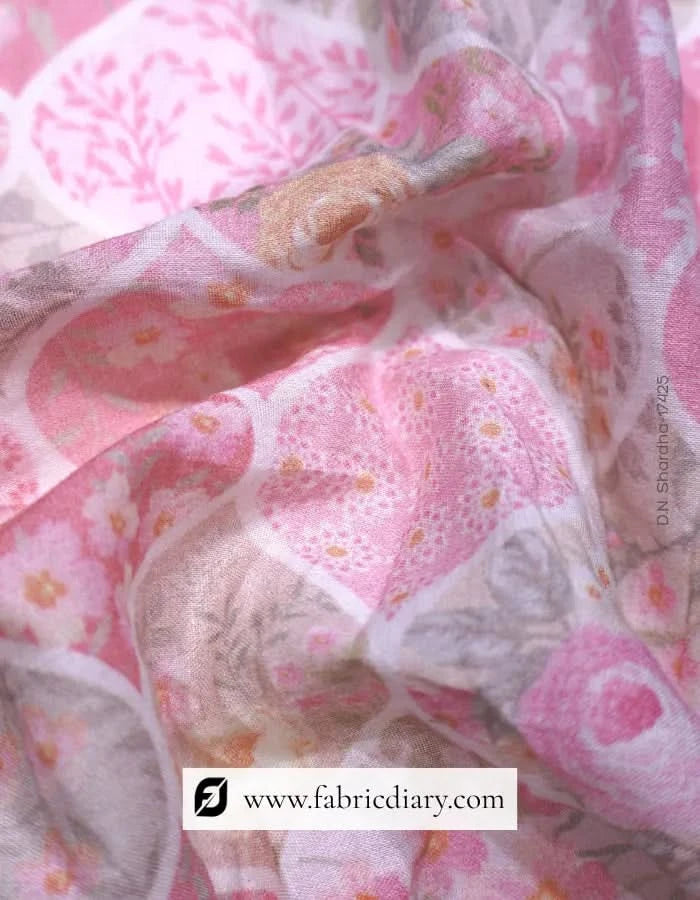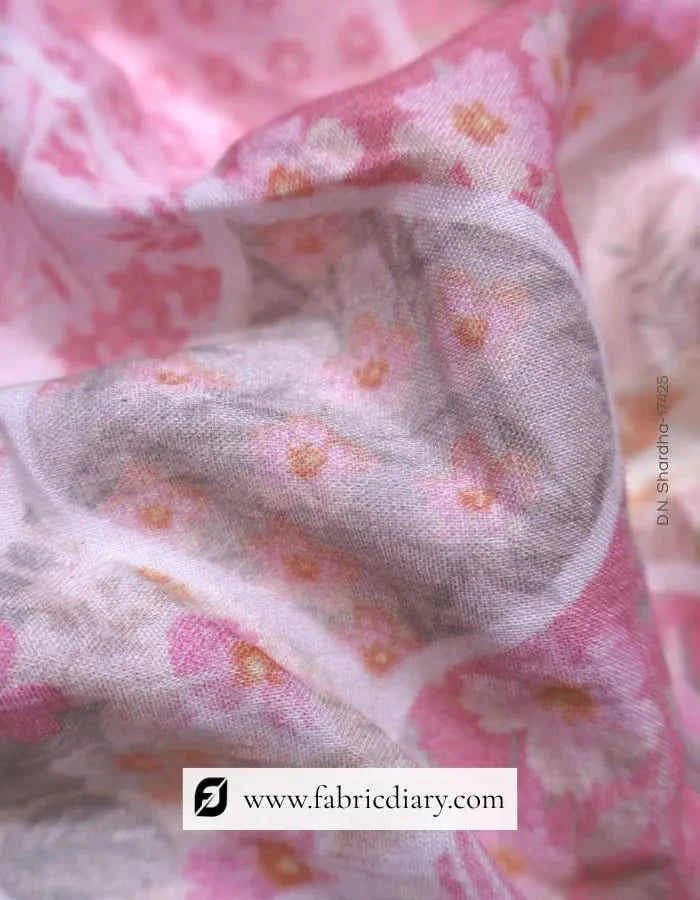
Pure Cambric Cotton Printed Fabric
- Featured
- Most relevant
- Best selling
- Alphabetically, A-Z
- Alphabetically, Z-A
- Price, low to high
- Price, high to low
- Date, old to new
- Date, new to old
For a buyer choosing cotton for a printed apparel program, the important question is not simply whether the fabric is soft. It is whether the base cloth gives the finished garment the right combination of cotton comfort, surface stability, print definition and garment structure.
Pure Cambric Cotton Printed Fabric is relevant when that balance matters. Cambric is a cotton construction commonly selected for apparel where a breathable natural-fibre base and a comparatively neat, compact hand are preferred over a very sheer or highly fluid textile. FabricDiary's current collection includes printed cambric cotton styles positioned for garments ranging from dresses and kurtis to sarees, dupattas and western wear.
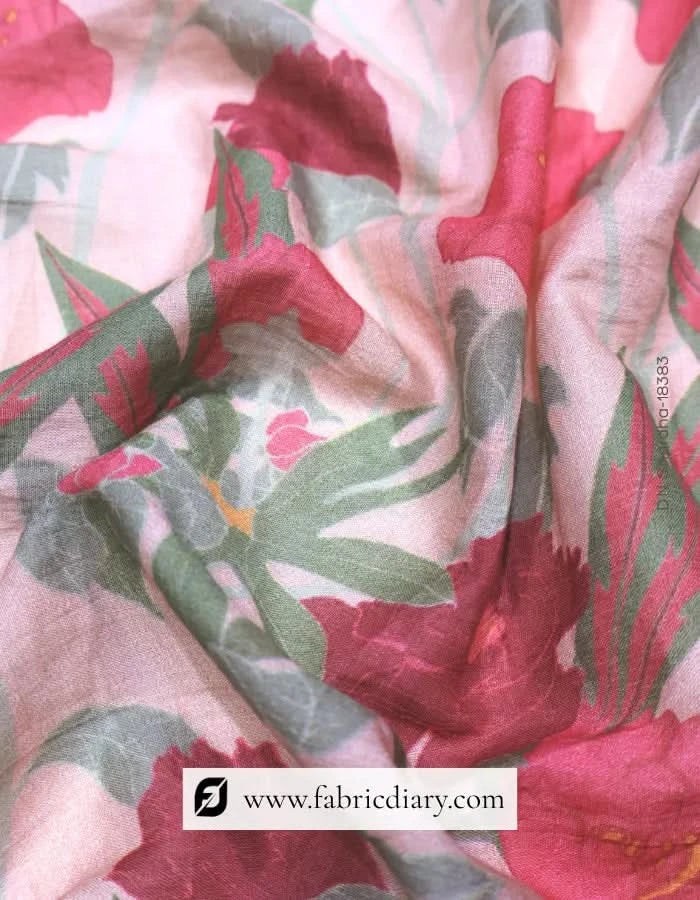
For buyers who are still comparing material-led printed fabrics, the natural starting point is FabricDiary's By Fabric Type (Material) collection. This page then narrows that decision to one specific material: pure cambric cotton.
What Defines Cambric Cotton as a Printed Fabric Base
Cambric cotton is a woven cotton fabric rather than a synthetic or blended fashion base. Its appeal comes from the relationship between the cotton fibre and the relatively compact, smooth construction associated with cambric.
That gives it a different commercial identity from the very soft, airy feel buyers may seek in mull or muslin. It is also fundamentally different from sheer, flowing constructions such as georgette, chinon or organza.
The key point for a buyer is construction stability.
A cambric base can provide a more controlled surface for apparel printing than an extremely open or highly transparent construction. That makes it useful when the design needs to remain visually legible across a practical garment fabric rather than becoming part of a deliberately sheer or floating silhouette.
The exact result still depends on the mill construction, yarn characteristics, finishing and printing process. “Pure cambric cotton” should therefore not be treated as a single universal specification for GSM, width, opacity or hand feel. Those details need to be confirmed against the actual production quality and approved sample.
The one technical distinction worth remembering is simple:
Cambric is chosen primarily for its cotton construction with a comparatively firm, stable apparel character—not for the fluidity or sheerness associated with many lightweight fashion fabrics.
That distinction should guide sourcing decisions more than the name of the print itself.
Technical Profile Buyers Should Check Before Approval
The commercial specification of a printed cambric fabric should be evaluated as a combination of base cloth + print + finishing, not as three unrelated items.
Fibre, surface and hand
For a pure quality, the fibre identity is cotton. The hand is generally more structured and less airy than very lightweight cotton constructions such as mull, although the actual softness can change with yarn, weave density, finishing and washing.
The surface is typically suitable for clear printed artwork without relying on the reflective sheen associated with satin-like or organza constructions.
For a buyer developing everyday apparel, this can be an advantage: the fabric itself does not need to create a luxurious sheen for the print to become the main visual feature.
Weight, opacity and drape
There is no single GSM that should be assumed for every cambric cotton quality. Width and weight can vary by mill, construction and finishing, so the physical sample should be the reference for approval.
Cambric is generally better suited to buyers wanting controlled apparel structure than buyers specifically seeking a highly fluid, translucent drape.
That makes the fabric particularly relevant where a dress, kurti, tunic, shirt or co-ord set needs printed colour and motif definition without making sheerness the principal design feature.
For lighter or more fluid garments, compare the actual sample against a fabric such as Pure Mull Cotton Printed Fabric or Pure Muslin Printed Fabric before approving production.
Breathability and finishing
Cotton remains the reason many buyers choose this category in the first place. Breathability and a natural-fibre hand can make printed cambric appropriate for casual and ethnic apparel.
Finishing matters, however. A buyer should assess shrinkage, dimensional behaviour, colour appearance, surface feel and wash response on the actual approved quality rather than assuming that all cambric behaves identically.
For export programs, the production specification should therefore record the approved fabric reference and print standard alongside the artwork.
How Cambric Cotton Behaves Under Printing
Cambric's relatively stable woven surface makes it well suited to printed apparel, particularly where the buyer wants the artwork to read clearly over continuous yardage.
The appropriate printing method depends on the order, artwork and required colour development.
Digital printing is particularly useful when the buyer needs detailed artwork, multiple colourways, sampling or buyer-specific development. FabricDiary describes digital textile printing as an important route for artwork development, sampling and flexible design programs.
Screen or rotary mill printing becomes commercially relevant when an approved design moves into substantial repeat production. The artwork, repeat, colour separation and production specification are developed and approved first; the mill then runs the design consistently across the production quantity.
Pigment and reactive approaches may both be considered for cotton depending on the specific base cloth, colour requirements and finishing system. They should not be treated as interchangeable choices. The appropriate process needs to be selected against the actual cotton construction and desired colour/fastness result.
For cambric, print development should pay attention to:
-
fine versus broad motif detail;
-
repeat size and registration;
-
colour density;
-
negative space;
-
scale after garment cutting;
-
consistency between the approved sample and production;
-
the visual effect of the fabric's natural surface on colour.
Allover repeat or engineered placement?
For this material-led collection, allover repeat printing is normally the more natural commercial orientation.
It works well for continuous fabric sold and cut by the metre because the design can repeat across the width and length without being tied to one particular garment panel.
Single-placement or engineered printing is still possible when the garment requires a defined motif, border or panel. But if the buyer's primary requirement is “put this artwork here on the garment,” the requirement belongs conceptually with FabricDiary's Position Printed Fabric route rather than being treated as ordinary allover cambric printing. FabricDiary itself distinguishes allover repeat from garment-specific placement.
That distinction matters for sampling and costing because an allover repeat can be evaluated as continuous yardage, while engineered placement must be evaluated against garment dimensions and cutting plans.
Where Printed Cambric Cotton Makes the Most Sense
Cambric cotton becomes commercially attractive when the buyer wants printed design combined with a natural cotton base and a relatively controlled garment hand.
The strongest applications include:
-
Kurtis and ethnic tops where print is a major part of the garment identity.
-
Dresses and tunics where a breathable cotton base is preferred over a fluid synthetic.
-
Co-ord sets where repeat consistency across coordinated pieces matters.
-
Shirts and casual tops where the fabric's stable character supports structured construction.
-
Salwar and contemporary ethnicwear where printed cotton is intended for repeatable production.
-
Sarees and dupattas when the selected cambric quality and print construction are appropriate for the intended product.
The fabric is less compelling when the finished garment depends primarily on sheer glamour, high transparency, pronounced lustre or a very fluid drape. In those cases, a buyer should compare the requirement against georgette, chinon or organza rather than forcing cambric into an unsuitable design brief.
A Buyer’s View: What Should Be Decided Before Ordering?
Different buyers arrive at the same fabric for very different reasons.
A boutique designer may first need a metre-scale sample to test a print on an actual garment.
A private-label brand may need several colourways and repeat sizes before choosing one design to scale.
An export house may already have an approved artwork and need consistent production against a reference.
A wholesaler may care primarily about repeatability, usable price and availability across a larger production program.
For all of them, the most useful approval questions are:
Is the cotton construction right for the garment?
Check hand, structure, opacity and drape on the physical sample.
Does the print look correct at garment scale?
A motif that looks attractive on a screen can become too dense, too small or too large once cut into a kurti, dress or shirt.
Is the colour reference clear?
For repeat orders, retain an approved physical or documented colour reference rather than relying only on a JPEG or screen display.
Is the requirement allover or engineered?
An allover repeat and a garment-specific placement are different production briefs.
Is the order experimental or already production-approved?
That decision influences whether digital printing or a mill-scale route makes commercial sense.
Sourcing and Manufacturing: Digital Development vs Bulk Mill Production
This is one of the most important distinctions for a serious B2B buyer.
Digital printing for sampling and smaller programs
Digital printing is the practical route when the buyer is testing a new design, needs buyer-specific artwork, wants to compare colourways or is producing a smaller boutique/private-label program.
The major advantage is development flexibility. Artwork can be changed between development runs without the same engraved-screen setup associated with conventional mill printing.
That makes digital particularly useful for:
-
designers;
-
boutique labels;
-
early-stage private-label collections;
-
sampling;
-
one-off or limited design development;
-
buyer-supplied artwork;
-
testing several colourways before scaling.
It does not mean every digital print is automatically suitable for every quantity or every commercial requirement. Fabric, ink system, artwork and finishing still need to be evaluated together.
Bulk mill printing for high-volume production
Once a design is approved and the buyer is ordering substantial production quantities, rotary or screen mill printing can become the more economical route.
The commercial logic is different.
The mill develops the repeat and colour specification, approves the production reference, establishes the print setup and then runs the design consistently across the bulk quantity.
Customization therefore happens during development, not continuously after production begins.
A manufacturer can request a new colourway or repeat during development and approve it. But once the production artwork and specification are locked for a bulk run, the objective is consistency and cost efficiency—not unlimited order-by-order changes.
For export houses, garment factories and wholesalers planning large production programs, this distinction should be clarified before costing.
Custom Cambric Print Development
Custom development is appropriate when the buyer has a specific design requirement rather than simply selecting an existing printed fabric.
Possible development inputs can include:
-
buyer-supplied artwork;
-
original motifs;
-
repeat-size adjustment;
-
colourway development;
-
colour matching against an approved reference;
-
scale changes;
-
border or engineered elements;
-
private-label collection development.
A custom project should begin with the fabric and garment requirement, not only the artwork file.
The same artwork can behave differently on a compact cotton surface and a fluid sheer fabric. Likewise, a fine motif may require adjustment if the buyer changes repeat size or moves from a sampling digital process to a bulk mill process.
FabricDiary's Custom Print route is intended for buyer-specific artwork and textile development, while Position Print concerns the location of artwork. The two can be combined when a buyer supplies custom artwork that must also be engineered for a garment.
For a development project, the safest sequence is:
Artwork → Fabric Selection → Print Development → Physical Sample → Garment Test → Approval → Production
Global Market Demand for Cambric Cotton Prints
Cambric's strongest international opportunity comes from markets where cotton apparel and printed everyday fashion have a practical role.
South Asia is especially relevant because buyers are accustomed to comparing cotton constructions directly. Indian, Pakistani, Bangladeshi and Sri Lankan buyers are likely to distinguish between cambric, mull and muslin on hand, construction and garment suitability rather than treating “cotton” as one category. Ethnicwear, kurtis, dresses and everyday fashion therefore provide natural applications.
North America and Europe can be relevant for private-label brands, boutique labels and apparel developers looking for natural-fibre printed fabrics. These buyers often benefit from clear specification records, physical approvals and reliable repeat-order colour references. For smaller brands, digital development can be especially useful before committing to a larger production program.
Middle Eastern buyers may consider cambric where a cotton apparel base and controlled opacity are more relevant than the sheer effect of organza or some fluid fabrics. The final suitability still depends on garment construction, lining and the actual fabric quality.
African wholesale markets, particularly where bold printed apparel is commercially important, can provide opportunities for repeat-print cotton programs. For such buyers, motif scale, colour impact, production consistency and price-per-metre economics may matter more than delicate placement effects.
These are directional sourcing patterns, not market-share claims. The individual buyer's garment category and commercial program should determine the final specification.
Wholesale and Bulk Buying Logic
A sensible wholesale strategy starts by matching the production route to the stage of the buyer's business.
A small designer or boutique should generally begin with a physical sample or small digital development. This is where hand feel, opacity, print clarity, colour and garment behaviour can be assessed without prematurely locking a large production program.
A mid-size private-label brand may need several digital development iterations, followed by a controlled production order once one artwork and fabric quality are approved.
A large garment manufacturer, export house or wholesaler should normally move toward a bulk mill-printing discussion once artwork, repeat, colourways and fabric specification are approved.
The commercial advantage of bulk production is not unlimited customization. It is repeatability and scale after development is locked.
For every wholesale enquiry, the useful information to provide is:
-
intended garment or end use;
-
required fabric construction;
-
allover or placement requirement;
-
artwork or design reference;
-
approximate quantity;
-
target colour direction;
-
required width/specification if already defined;
-
destination market;
-
sampling requirement before bulk approval.
That information allows the sourcing discussion to move from a generic fabric enquiry to a production-ready brief.
Choosing Cambric Against Other Fabric Routes
Choose Pure Cambric Cotton Printed Fabric when the priority is a pure cotton apparel base with a comparatively stable, compact character and clear printed surface.
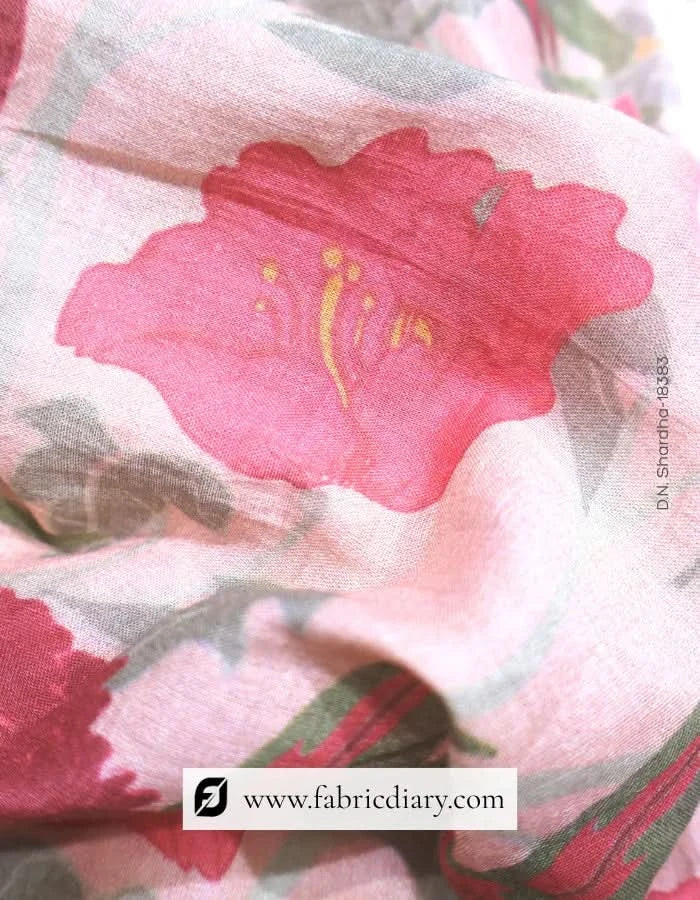
Choose Pure Mull Cotton Printed Fabric when a softer, lighter and airier cotton character is more important.
Choose Pure Muslin Printed Fabric when the project calls for a lighter, softer and more fluid cotton direction.
Choose Pure Georgette Printed Fabric when drape and fluid movement matter more than a cotton construction.
Choose Pure Chinon Printed Fabric when a flowing, dress-oriented appearance is the priority.
Choose Pure Organza Printed Fabric when transparency, structure and a more elevated sheer effect are central to the garment.
And if the requirement starts with a particular visual category rather than the material, the Printed Fabric hub or a relevant pattern/occasion route may be the better starting point.
The point is not to make cambric appear suitable for every garment. A strong sourcing decision is one where the fabric's construction supports the finished product.
Related Collections and Sourcing Routes
For material-led comparison, start with By Fabric Type (Material).
For the broader printed-fabric ecosystem, visit Printed Fabric.
Useful material comparisons include:
For a buyer-developed artwork requirement, see Custom Print.
For garment-specific artwork placement, see Position Printed Fabric.
For buyers beginning with a visual direction such as floral, geometric or occasionwear, use the relevant By Pattern/Occasion route within FabricDiary's Printed Fabric architecture. FabricDiary explicitly separates material-led, pattern-led, position and custom-print discovery so that each route serves a different sourcing intent.
FAQ
1. What is Pure Cambric Cotton Printed Fabric?
It is printed fabric made from a pure cambric cotton base, combining cotton's natural-fibre character with a comparatively compact woven construction suitable for apparel.
2. Is cambric cotton lightweight?
Cambric can be available in lighter apparel qualities, but there is no universal GSM or weight for every cambric fabric. The actual mill quality should be checked by sample.
3. Is cambric cotton breathable?
Cotton is generally valued for breathability, making cambric relevant to everyday and ethnic apparel. Actual comfort also depends on construction, finishing and garment design.
4. Is printed cambric cotton transparent?
Cambric is generally selected when buyers want more coverage than a deliberately sheer fabric, but opacity varies with the particular construction, colour and finishing. Always assess the actual sample.
5. Does cambric cotton have a soft drape?
It can have a comfortable cotton hand, but its drape is generally more controlled than very fluid fabrics such as georgette or chinon. Finishing and fabric weight influence the final feel.
6. Is cambric better for allover prints or placement prints?
Allover repeat printing is the more natural orientation for this material-led collection because it supports continuous apparel yardage. Placement printing can be developed when a garment requires defined artwork positioning.
7. Can cambric cotton be digitally printed?
Yes. Digital printing is particularly relevant for sampling, detailed artwork, colourway development and buyer-specific designs, subject to the actual fabric and printing system.
8. Is screen or rotary printing suitable for cambric cotton?
It can be suitable for larger production programs where an approved design is repeated across substantial yardage. The appropriate print process depends on the fabric, artwork and required colour/fastness result.
9. Which is better for a small boutique order: digital or bulk mill printing?
Digital printing is generally the more practical development route for small, boutique and sampling-stage requirements because artwork can be changed more easily between runs.
10. What printing route should an export house use for high-volume cambric?
Once the fabric, artwork, repeat and colour specification have been approved, bulk rotary or screen mill printing is generally the more commercially appropriate route for high-volume production.
11. Can I change the design for every bulk order?
Not in the sense of unlimited per-order customization within one established bulk mill run. Changes such as artwork, repeat or colourway should be handled during development and approval before the production specification is locked.
12. What garments are suitable for printed cambric cotton?
Strong applications include kurtis, dresses, tunics, shirts, co-ord sets and selected ethnicwear. Sarees and dupattas can also be considered when the specific cambric construction suits the product.
13. Is cambric cotton suitable for children's clothing?
It can be considered for children's apparel where the actual fabric hand, construction, finishing and intended garment use are appropriate. The finished garment specification should be assessed rather than assuming suitability from the fabric name alone.
14. Can I supply my own artwork for cambric cotton printing?
Yes, buyer-supplied artwork can form part of a custom development project. Artwork should be reviewed against the actual fabric, print method, repeat and required production scale.
15. Can the same artwork be printed in different colourways?
Potentially, yes. Colourway development is a common custom-print requirement, but the final appearance should be approved on the actual cambric base because fabric and print process influence colour perception.
16. Should I approve a sample before placing a bulk order?
Yes. A physical approval sample is particularly useful for checking hand feel, opacity, motif scale, print clarity, colour and garment behaviour before production is scaled.
17. What should a European or North American private-label buyer document?
The buyer should maintain an approved fabric reference, artwork file, colour reference, repeat specification and relevant construction details so that future production can be compared against the same standard.
18. Why might a South Asian buyer choose cambric instead of mull or muslin?
The decision often comes down to construction and hand feel. Cambric can provide a more controlled cotton character, while mull and muslin may be preferred when greater lightness, softness or airiness is wanted.
19. Is cambric cotton suitable for Middle Eastern apparel programs?
It can be, particularly where a cotton base and controlled coverage are useful. The actual garment, climate, lining and required opacity should be considered before approval.
20. Can FabricDiary support both sample-stage and bulk cambric sourcing?
Yes. The appropriate route depends on the development stage: digital printing can support sampling and smaller/custom programs, while approved high-volume designs can move into bulk mill production. The commercial production method should be selected according to quantity, artwork and specification rather than assuming one process fits every order.
Pure Cambric Cotton Printed Fabric is best understood as a material-led sourcing choice, not simply another printed pattern category.
Its value lies in the combination of a pure cotton base, a comparatively stable cambric construction and a surface that can support practical printed apparel programs. That makes it especially relevant to brands and manufacturers developing kurtis, dresses, tunics, shirts, co-ords and other cotton-led fashion.
The sourcing decision becomes clearer when the buyer separates three questions:
Is cambric the right fabric? Is the print allover or engineered? And is the order at sampling stage or ready for bulk mill production?
Answer those three questions first, then choose the printing and development route.
Next step: Request a fabric sample with your intended artwork or garment requirement so the cambric quality, print scale, colour and hand can be evaluated before bulk production.
FabricDiary Global B2B Sourcing Desk
Direct textile manufacturing facility supplying premium fabrics to Apparel Buying Houses, Fashion Merchandisers, Garment Exporters, and Boutique Labels across North America, Europe, the Middle East, and Africa.
Ready Stock MOQ
1 Meter (Immediate Dispatch)
Custom Production MOQ
30 Mtr (Dyes/Prints) | 300 Pcs (Patches)
Trims & Laces MOQ
Standard 9-Meter Rolls
Trade & Shipping Terms
FOB, CIF, DDP Air/Sea Freight
Read More about Pure Cambric Cotton Printed Fabric