
Hakoba - Predesign Fabric
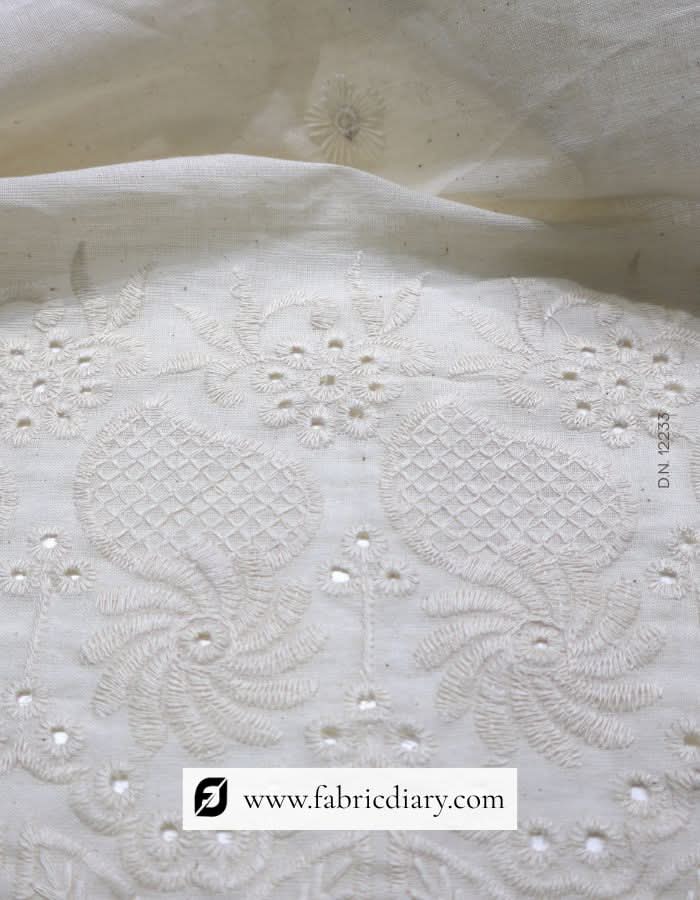

Designer Hakoba Fabric for Premium Women's Dress #12233


Designer Embroidered Lucknowi Chikankari Daman Fabric – #11284


Eyelet Embroidered Cotton Fabric for Caribbean Dresses #14536


Broderie Anglaise Cotton Fabric for French Style Dresses #14535


Schiffli Lace Cotton Fabric for Middle Eastern Dresses #14534


Cotton Lace Fabric for Latin American Dresses #14533


Swiss Voile Cotton Fabric for Asian Traditional Dresses #14532


Cotton Eyelet Fabric for European Summer Dresses #14520


Hakoba Cotton Fabric for African Dresses #14514


Vintage Style Schiffli Cotton Lace Fabric for Dressmaking #14526


Cotton Eyelet Lace Fabric – Broderie Anglaise Dress Material #14525


Swiss Voile Eyelet Cotton Fabric – Lace Embroidery Material #14524
- Featured
- Most relevant
- Best selling
- Alphabetically, A-Z
- Alphabetically, Z-A
- Price, low to high
- Price, high to low
- Date, old to new
- Date, new to old
Hakoba Predesign Fabric represents an advanced category of premium embroidered textiles, uniquely defined by its strategically pre-planned embroidery compositions, ornamental perforations, and intricate cutwork motifs—all meticulously executed prior to the garment cutting stage. In contrast to standard embroidered materials that feature repetitive all-over designs, this fabric is engineered with ready-to-use placement patterns, synchronized border strips, sleeve inserts, yoke details, hem accents, and decorative elements that are seamlessly woven into the textile's structural blueprint.
This forward-thinking methodology drastically reduces the time typically required for design conceptualization while guaranteeing uniformity across multiple production runs, making it an indispensable asset for fashion houses, mass-manufacturing units, boutique studios, and custom-label apparel ventures.
Occupying a distinct niche within the wider landscape of ornamental textiles, the true worth of this collection extends beyond its aesthetic embellishments to encompass significant operational advantages. It empowers creators with fixed embroidery zones that streamline pattern engineering, optimize material consumption, and preserve visual harmony during large-scale order fulfillment. For producers crafting cohesive seasonal ranges, Hakoba Predesign Fabric eliminates the complexities of embroidery scheduling and layout finalization during the sampling phase, offering a seamless bridge between creative vision and efficient execution.


Originally associated with fine cotton embroidery traditions, Hakoba has evolved into a globally recognized textile category appreciated for breathable comfort, refined craftsmanship, and timeless appeal. Today's predesign versions combine traditional eyelet embroidery with modern textile engineering, allowing manufacturers to deliver ready-to-cut embroidered panels suitable for contemporary fashion collections.
International demand continues to rise as consumers increasingly prefer lightweight, breathable, and naturally elegant fabrics over heavily embellished alternatives. Fashion labels serving resort wear, summer collections, children's apparel, premium casualwear, and contemporary ethnic fashion frequently select Hakoba Predesign Fabric because it offers visual sophistication without excessive weight or ornamentation.
From sourcing teams, buying houses, and export merchants to independent designers and garment factories, the collection provides practical manufacturing advantages alongside strong aesthetic value. It also complements other categories available on FabricDiary, including Printed Fabric, Jacquard Fabric, and Plain Fabric, enabling brands to build coordinated seasonal collections with consistent quality and design language.
Whether intended for domestic apparel production or international exports, Hakoba Predesign Fabric represents a commercially intelligent textile solution that combines embroidery craftsmanship, garment engineering, and manufacturing efficiency into a single fabric platform.
What is Hakoba - Predesign Fabric?
Hakoba Predesign Fabric is an embroidered fabric manufactured with predetermined embroidery placements that correspond to garment components rather than repeating continuously across the entire fabric width. The embroidery generally incorporates eyelets, cutwork, floral motifs, geometric patterns, scalloped edges, and ornamental perforations that are arranged according to planned garment construction.
The fabric is known by several names across international textile markets, including:
Eyelet Fabric
Eyelet Cotton
Cutwork Fabric
Broderie Anglaise
Schiffli Embroidery
Chikan Style Eyelet Fabric
Swiss Voile Embroidery
Cotton Eyelet Fabric
Although these names are often used interchangeably, commercial buyers recognize subtle differences based on embroidery technique, base fabric, finishing process, and regional manufacturing practices. Hakoba Predesign Fabric specifically emphasizes ready-to-use embroidery layouts that support efficient garment production.
Technical Definition
Technically, Hakoba Predesign Fabric is produced by embroidering a base fabric—most commonly cotton or cotton blends—using Schiffli embroidery machines capable of creating decorative stitching alongside precision-cut eyelets. Once embroidery is completed, specialized cutting mechanisms remove selected portions of the fabric to create clean perforations, producing the characteristic openwork appearance associated with Hakoba textiles.
Unlike heavily embellished luxury embroidery, the emphasis is on balance between decoration and wearability. The resulting fabric maintains excellent breathability while delivering refined visual texture suitable for premium apparel.
Construction
A typical Hakoba Predesign Fabric consists of:
Lightweight woven base fabric
Precision embroidery stitching
Engineered eyelet openings
Controlled cutwork sections
Predefined garment panels
Coordinated borders
Sleeve layouts
Hem placements
Matching yokes or neckline motifs
These construction elements enable manufacturers to optimize marker planning and reduce embroidery wastage during garment production.
Embroidery Placement Strategy
One of the defining characteristics of this collection is strategic embroidery placement.
Instead of repeating motifs at equal intervals across the entire fabric, designers create embroidery maps that correspond to actual garment sections. Examples include:
Front panels
Back panels
Sleeve motifs
Neckline embroidery
Bottom borders
Scalloped hems
Coordinated dupatta borders
Children's dress panels
This planned arrangement improves cutting accuracy while helping brands achieve consistent garment aesthetics across production runs.
Manufacturing Overview
The production process begins with careful selection of the base fabric, followed by digital embroidery programming. Schiffli embroidery machines execute the embroidery while integrated cutting mechanisms produce eyelets and decorative openings. After embroidery, the fabric undergoes washing, trimming, thread cleaning, finishing, pressing, and quality inspection before being folded or rolled for garment manufacturers.
Modern manufacturing facilities also integrate computerized design systems that allow brands to develop exclusive predesign layouts for seasonal collections and private label programs.
Commercial Positioning
Hakoba Predesign Fabric occupies a distinct market segment between basic embroidered yardage and fully stitched garments.
Its commercial advantages include:
Reduced garment development time
Lower embroidery planning costs
Improved fabric utilization
Faster sampling
Consistent bulk production
Better pattern alignment
Premium visual presentation
These advantages make it particularly attractive for brands seeking efficient production without compromising embroidery aesthetics.
Key Characteristics
Hakoba Predesign Fabric combines refined embroidery with functional garment engineering. Rather than relying on heavy embellishment, it creates elegance through precision, texture, and carefully balanced openwork.
Texture
The fabric typically offers a soft, smooth hand feel with subtle dimensional embroidery. Eyelet perforations introduce additional tactile variation without making the surface excessively heavy.
Natural cotton versions remain breathable and comfortable, while blended constructions may provide enhanced wrinkle resistance and durability.
Drape
Depending on the chosen base fabric, Hakoba Predesign Fabric generally exhibits a graceful yet structured drape.
Cotton varieties produce relaxed silhouettes suitable for dresses and kurtis, while voile and lightweight blends offer fluid movement ideal for summer apparel.
The predesigned embroidery rarely compromises drape because stitch density is carefully engineered to maintain flexibility.
Appearance
Visually, Hakoba Predesign Fabric is characterized by:
Decorative eyelets
Clean cutwork
Floral embroidery
Geometric motifs
Scalloped borders
Coordinated panels
Elegant negative space
Refined handcrafted appearance
Its understated sophistication allows designers to create garments that feel premium without appearing overly ornate.
Weight
Most Hakoba Predesign Fabrics fall within lightweight to medium-lightweight categories, making them suitable for warm climates and layered fashion.
Typical commercial ranges vary depending on construction, embroidery coverage, and base material.
Lightweight constructions are widely used for:
Summer dresses
Resort wear
Children's clothing
Casual tops
Tunics
Medium-weight versions are preferred for:
Designer kurtis
Fashion co-ords
Layered garments
Structured tops
Comfort
Comfort is one of the strongest commercial advantages of Hakoba Predesign Fabric.
Eyelet openings improve airflow, while breathable woven constructions reduce heat retention. This makes the fabric especially popular in tropical, subtropical, and warm-weather markets where consumers prioritize comfort alongside aesthetics.
Soft finishing treatments further enhance wearability by minimizing stiffness after embroidery.
Durability
Despite its delicate appearance, high-quality Hakoba Predesign Fabric offers reliable durability when manufactured using appropriate stitch density, stabilized embroidery, and quality base fabrics.
Performance depends on:
Fabric stability
Embroidery tension
Thread quality
Eyelet finishing
Washing processes
Cutting precision
Properly produced fabrics maintain embroidery integrity through repeated wear and laundering.
Visual Impact
Rather than creating glamour through sequins or beads, Hakoba Predesign Fabric achieves distinction through craftsmanship and precision.
The interplay between embroidered motifs and open eyelets creates depth, shadow, and texture that elevate even minimalist garment designs. This refined aesthetic appeals to consumers seeking timeless elegance instead of trend-driven embellishment.
Manufacturing Process
The manufacturing of Hakoba Predesign Fabric requires close coordination between textile engineers, embroidery programmers, production planners, and quality control specialists. Because embroidery placements correspond to garment components, accuracy throughout production is critical.
1. Base Fabric Selection
The manufacturing process begins with selecting an appropriate woven base fabric that offers dimensional stability, embroidery compatibility, and the desired hand feel.
Cotton remains the preferred substrate due to its breathability, natural appearance, and ability to support intricate eyelet embroidery. Depending on the intended end use, manufacturers may also choose voile, cambric, lawn, poplin, rayon blends, linen blends, or lightweight cotton-polyester constructions.
Factors evaluated during base selection include:
Fabric weight
Yarn count
Thread density
Shrinkage performance
Surface smoothness
Dye compatibility
Embroidery stability
2. Design Development
Unlike conventional embroidered fabrics with repetitive motifs, Hakoba Predesign Fabric begins with garment-oriented design planning.
Design teams map embroidery placements according to actual apparel components such as front panels, sleeve sections, necklines, hems, yokes, and coordinated borders. Digital CAD systems are used to optimize layout efficiency, minimize fabric wastage, and ensure visual balance across the finished garment.
Attention is also given to motif scale, spacing, eyelet positioning, and seam allowances so that embroidery aligns correctly after cutting and stitching.
3. Embroidery Execution
Once the design layout is finalized, the embroidery program is transferred to high-precision Schiffli embroidery machines.
These machines simultaneously create decorative stitching and, where required, precision eyelet perforations. Controlled thread tension, stitch density, and machine calibration are essential to maintain uniform embroidery quality throughout the fabric roll.
Specialized cutting mechanisms integrated into the embroidery process remove designated fabric sections, forming clean cutwork patterns without compromising structural integrity.
4. Finishing
After embroidery, the fabric undergoes a series of finishing operations designed to enhance appearance, comfort, and performance.
Common finishing stages include:
Washing to remove stabilizers and loose fibers
Trimming excess threads
Cleaning embroidery residues
Softening treatments for improved hand feel
Heat setting where applicable
Pressing and calendaring for uniform presentation
These processes help achieve the refined finish expected by premium fashion brands.
5. Inspection and Quality Control
Every production batch is inspected to ensure consistency before dispatch.
Quality teams evaluate:
Embroidery alignment
Eyelet precision
Thread trimming
Fabric width
Color uniformity
Shrinkage parameters
Surface cleanliness
Roll length accuracy
Packaging standards
Because the embroidery layout is pre-engineered for garment production, even minor deviations can affect cutting efficiency. As a result, dimensional accuracy and placement consistency receive particular attention during final inspection.
Common Base Fabrics
Although Hakoba Predesign Fabric can be developed on multiple substrates, base fabric selection significantly influences appearance, performance, comfort, and commercial positioning.
Cotton
Cotton is the most widely used base for Hakoba Predesign Fabric due to its natural breathability, soft hand feel, and excellent compatibility with eyelet and cutwork embroidery. It is ideal for summer apparel, children's garments, kurtis, dresses, tunics, and casual fashion collections.
Cotton Voile
Cotton voile provides an exceptionally lightweight and semi-sheer foundation that enhances the delicate appearance of eyelet embroidery. It is frequently chosen for premium resort wear, layered garments, blouses, and feminine fashion.
Cambric
Cambric offers a smooth, tightly woven surface that supports intricate embroidery with excellent stitch definition. Its balanced structure makes it suitable for refined tops, coordinated sets, and premium ready-to-wear collections.
Lawn Cotton
Lawn cotton combines softness with a crisp finish, allowing highly detailed embroidery while maintaining excellent drape. Designers often select this base for luxury summer collections where comfort and sophistication are equally important.
Linen Blends
Linen-cotton blends introduce subtle texture and a contemporary natural aesthetic. These fabrics appeal to brands focusing on sustainable-inspired fashion, relaxed silhouettes, and breathable premium apparel.
Rayon Blends
Rayon blends provide increased fluidity and graceful movement, making them suitable for modern dresses and fashion-forward silhouettes that benefit from softer drape while retaining decorative embroidery.
The choice of base fabric ultimately depends on garment category, target market, climate, pricing strategy, and desired consumer experience, allowing Hakoba Predesign Fabric to serve a wide spectrum of fashion applications across domestic and international markets.
Garment Applications
One of the biggest commercial strengths of Hakoba - Predesign Fabric is that it is engineered with garment construction in mind rather than simply offering decorative embroidery. Because embroidery layouts are planned before cutting, manufacturers can produce garments with better visual balance, lower production complexity, and improved fabric utilization.
Unlike heavily embellished embroidery collections that are primarily reserved for festive occasions, Hakoba Predesign Fabric serves both fashion and functional apparel categories. Its breathable structure, elegant appearance, and lightweight construction make it suitable for everyday premium wear as well as designer collections.
Designer Kurtis
Designer kurtis remain one of the largest application segments for Hakoba Predesign Fabric across India, the Middle East, and South Asia.
Predesigned embroidery layouts simplify production by providing:
Front embroidered panels
Coordinated sleeve motifs
Neckline placements
Decorative hems
Matching borders
This reduces manual embroidery planning while helping manufacturers maintain consistent sizing and pattern placement across production batches.
Contemporary Dresses
Fashion brands increasingly use Hakoba Predesign Fabric for:
Summer dresses
Shirt dresses
Tiered dresses
A-line silhouettes
Midi dresses
Resort dresses
The breathable eyelet construction offers comfort during warm weather while adding refined visual texture without requiring additional embellishments.
Women's Tops & Tunics
Premium casualwear collections frequently include Hakoba embroidered tops because they bridge the gap between everyday comfort and elevated fashion.
Popular styles include:
Peasant tops
Bohemian blouses
Office-ready tunics
Casual embroidered shirts
Relaxed fit tops
Vacation wear
The embroidered panels provide sufficient visual interest without increasing garment weight.
Co-Ord Sets
Co-ord fashion has become a significant global trend.
Hakoba Predesign Fabric allows manufacturers to create matching:
Shirts
Shorts
Skirts
Palazzo sets
Crop tops
Overshirts
Because embroidery placement is coordinated across multiple garment components, the finished outfit appears intentionally designed rather than assembled from standard embroidered fabric.
Children's Wear
Eyelet embroidery has long been associated with children's clothing due to its softness, comfort, and timeless appearance.
Applications include:
Baby dresses
Christening garments
Girls' frocks
Occasion wear
Summer outfits
Coordinated sibling collections
Lightweight cotton constructions help maintain comfort while allowing attractive decorative detailing.
Resort Wear
Luxury resort collections frequently feature Hakoba fabrics because they combine:
Breathability
Lightweight construction
Elegant embroidery
Soft drape
Relaxed styling
Designers often pair Hakoba embroidery with neutral color palettes, natural fibers, and relaxed silhouettes that appeal to vacation fashion.
Premium Sleepwear & Loungewear
Modern premium loungewear increasingly incorporates embroidered cotton fabrics.
Hakoba Predesign Fabric offers:
Comfortable construction
Breathable performance
Feminine aesthetics
Soft texture
Lightweight feel
This makes it suitable for luxury homewear collections targeting premium consumers.
Fashion Accessories
Although primarily used in apparel, selected Hakoba constructions are also suitable for:
Scarves
Lightweight stoles
Fashion collars
Decorative cuffs
Coordinated fabric accessories
Boutique handcrafted products
Why Fashion Brands Use Hakoba - Predesign Fabric
The growing popularity of Hakoba Predesign Fabric is driven not only by aesthetics but also by its measurable commercial advantages throughout the apparel development cycle.
Unlike conventional embroidered yardage, this collection contributes to faster product development, improved manufacturing consistency, and stronger product differentiation.
Product Differentiation
Today's fashion market is highly competitive.
Consumers increasingly seek garments that appear thoughtfully designed rather than mass-produced.
Hakoba Predesign Fabric enables brands to launch collections featuring:
Engineered embroidery
Balanced garment layouts
Premium detailing
Sophisticated craftsmanship
without significantly increasing manufacturing complexity.
Faster Collection Development
Since embroidery placement is already integrated into the fabric design, product development teams spend less time adjusting embroidery for each new garment.
Benefits include:
Reduced sampling cycles
Faster approvals
Quicker production readiness
Improved communication between designers and manufacturers
For seasonal collections with tight launch schedules, these efficiencies can significantly reduce development timelines.
Luxury Appeal Without Excess Weight
Luxury fashion does not always require heavy embellishment.
Hakoba achieves premium positioning through:
Precision embroidery
Delicate eyelets
Refined cutwork
Balanced negative space
This understated elegance appeals to consumers who prefer timeless sophistication over ornate decoration.
Design Flexibility
Despite using predefined layouts, Hakoba Predesign Fabric remains highly adaptable.
Brands can create:
Minimalist collections
Resort wear
Contemporary ethnic wear
Boutique apparel
Premium casual fashion
Sustainable-inspired collections
The same base embroidery can support multiple garment categories through thoughtful pattern engineering.
Better Production Consistency
Mass production often suffers from embroidery variation when embroidery is applied after garment cutting.
Predesigned embroidery eliminates much of this variability by ensuring every fabric roll contains standardized embroidery placements.
Manufacturers benefit from:
Improved repeatability
Better cutting efficiency
Lower rejection rates
Easier quality control
Predictable garment appearance
Enhanced Brand Positioning
Brands seeking premium market positioning frequently use Hakoba embroidery because consumers associate eyelet fabrics with:
Craftsmanship
Natural elegance
High-quality cotton
Comfort
Premium finishing
These characteristics strengthen perceived value without requiring expensive embellishment materials.
Buyer Guide
Professional sourcing decisions involve much more than selecting attractive embroidery.
Buyers should evaluate Hakoba Predesign Fabric based on technical specifications, production compatibility, commercial requirements, and long-term supply capabilities.
GSM - TECHNICAL DETAILS
GSM (grams per square meter) influences garment performance, durability, and drape.
Typical commercial ranges include:
70–100 GSM for lightweight Apparel
100–140 GSM for dresses and tops
140–180 GSM for structured garments
Higher GSM constructions for specialized fashion products
Selection depends on target market, garment style, and consumer expectations.
Fabric Width
Commercial widths generally range between:
44 inches
48 inches
52 inches
56 inches
58 inches
60 inches
Predesigned layouts should always be evaluated alongside garment marker planning to maximize cutting efficiency.
Minimum Order Quantity (MOQ)
MOQ varies according to:
Stock-supported collections
Custom developments
Exclusive embroidery programs
Private label production
OEM manufacturing
Sampling quantities are typically available before confirming bulk production, while customized developments generally require higher commercial commitments.
Sampling Programs
Professional buyers should request samples to evaluate:
Embroidery quality
Fabric hand feel
Washing performance
Shrinkage
Color accuracy
Garment compatibility
Cutting efficiency
Sampling significantly reduces sourcing risk before bulk orders are finalized.
Lead Times
Production timelines depend upon:
Fabric availability
Embroidery complexity
Dyeing requirements
Finishing processes
Quality inspections
Export documentation
Stock-supported qualities usually ship faster than exclusive developments, while customized embroidery layouts require additional design approval and sampling stages.
Early production planning is particularly important for seasonal fashion collections where retail launch dates are fixed.
Production Planning
Successful production requires coordination between:
Design teams
Pattern makers
Fabric sourcing departments
Garment factories
Quality control teams
Logistics providers
Predesigned embroidery layouts should be reviewed before marker making to ensure embroidery aligns correctly with garment patterns.
Quality Evaluation During Buying
Before approving bulk production, sourcing teams should inspect:
Overall embroidery precision
Eyelet cleanliness
Fabric straightness
Roll consistency
Shade variation
Embroidery placement
Surface cleanliness
Thread trimming
Finishing quality
Packaging condition
Technical evaluation should always accompany aesthetic assessment.
Global Market Demand
Hakoba Predesign Fabric enjoys broad international demand because it combines natural comfort, refined embroidery, and production efficiency.
Regional preferences differ according to climate, fashion culture, consumer expectations, and retail positioning.
North America
Demand is strongest within:
Boutique fashion
Resort collections
Contemporary women's wear
Sustainable-inspired apparel
Premium children's clothing
Consumers appreciate breathable cotton fabrics with understated detailing that can transition easily between casual and semi-formal occasions.
Private label retailers also value engineered embroidery because it supports consistent production quality.
Europe
European buyers generally prioritize:
Natural fibers
Minimalist embroidery
Lightweight construction
Timeless styling
Sustainable manufacturing practices
White cotton Hakoba remains particularly popular for spring and summer collections, while neutral shades continue to dominate premium ready-to-wear segments.
Middle East
The Middle East represents an important export destination.
Buyers frequently source Hakoba fabrics for:
Modest fashion
Long dresses
Tunics
Abayas with embroidered accents
Premium casualwear
There is strong preference for refined embroidery that delivers elegance without excessive ornamentation.
South Asia
South Asia remains one of the largest markets due to cultural familiarity with embroidered cotton textiles.
Applications include:
Kurtis
Dresses
Ethnic fusion wear
Everyday fashion
Boutique collections
Demand increases significantly during festive seasons and summer apparel launches.
Australia
Australian fashion brands increasingly adopt Hakoba fabrics for:
Coastal fashion
Resort wear
Vacation collections
Contemporary casualwear
The breathable structure aligns well with warm-weather lifestyles and relaxed fashion aesthetics.
Africa
Growing middle-class fashion markets have created opportunities for embroidered cotton fabrics across several African countries.
Hakoba fabrics are used in:
Boutique tailoring
Women's fashion
Designer garments
Contemporary African fusion apparel
Lightweight construction and decorative appeal make the collection commercially attractive for both local manufacturing and imported ready-to-wear production.
Quality Evaluation Guide
Consistent quality is essential because Hakoba Predesign Fabric is intended for precision garment manufacturing rather than decorative fabric sales alone.
Professional buyers evaluate multiple technical parameters before approving production.
Stitch Density
Embroidery should demonstrate balanced stitch density.
Overly dense embroidery may reduce flexibility, while insufficient density can compromise motif clarity and durability.
Uniform stitch formation across the entire fabric roll indicates well-calibrated embroidery equipment.
Embroidery Consistency
Each embroidered panel should maintain:
Identical motif dimensions
Accurate placement
Uniform thread tension
Balanced spacing
Clean stitch formation
Consistency becomes particularly important during bulk apparel manufacturing.
Fabric Stability
The base fabric should remain dimensionally stable throughout embroidery.
Inspect for:
Distortion
Puckering
Warping
Misalignment
Excessive shrinkage
Stable fabric ensures accurate garment cutting and reliable fit.
Eyelet & Cutwork Precision
Eyelets should exhibit:
Smooth edges
Clean cutting
Uniform size
Proper reinforcement
No fraying
Poorly executed cutwork may weaken the fabric or reduce garment durability.
Color Consistency
All production lots should maintain consistent shade throughout the order.
Buyers commonly compare:
Lab dips
Bulk dye lots
Roll-to-roll consistency
Batch matching
This is particularly important for coordinated garment collections.
Thread Quality
Embroidery thread should demonstrate:
High tensile strength
Colorfastness
Uniform twist
Minimal lint
Resistance to repeated washing
Premium thread contributes significantly to the long-term appearance of embroidered garments.
Surface Inspection
Inspect every roll for visible defects such as:
Missing stitches
Broken threads
Oil stains
Needle marks
Fabric slubs
Loose trimming
Needle holes
Contamination
Incorrect embroidery registration
Early defect detection minimizes production losses and improves overall manufacturing efficiency.
Custom Development Options
Modern fashion businesses increasingly require fabrics that reflect their own design identity rather than relying solely on standard market collections. Hakoba - Predesign Fabric is particularly well suited for custom development because both the embroidery layout and the garment engineering can be tailored to specific brand requirements.
Unlike standard embroidered yardage, custom Hakoba developments allow embroidery to be planned according to the final garment, resulting in better aesthetics, reduced fabric wastage, and improved production efficiency.
OEM Manufacturing
Original Equipment Manufacturing (OEM) enables brands to source Hakoba Predesign Fabric manufactured according to their own technical specifications.
OEM programs may include:
Specific base fabric selection
Customized embroidery density
Required fabric width
Buyer-approved GSM
Dye-to-match colors
Exclusive finishing requirements
Brand-specific packing
This model is commonly preferred by garment manufacturers, sourcing companies, buying houses, and international apparel retailers.
ODM Development
Original Design Manufacturing (ODM) is ideal for buyers looking to accelerate product development.
Manufacturers can offer:
Ready embroidery concepts
Seasonal design libraries
Trend-based motifs
Coordinated panel layouts
Fashion-focused embroidery placements
ODM shortens development cycles while allowing buyers to launch new collections quickly.
Private Label Collections
Private label fashion continues to grow globally, particularly among online retailers and boutique fashion brands.
Hakoba Predesign Fabric supports private label programs through:
Exclusive embroidery combinations
Custom color palettes
Unique garment placements
Buyer-specific fabric programs
Retail-ready developments
Exclusive fabric programs help brands establish recognizable product identities that are difficult to replicate.
Exclusive Design Development
Brands seeking market differentiation often commission exclusive embroidery developments.
Customization options include:
Floral compositions
Botanical motifs
Geometric layouts
Contemporary abstract embroidery
Minimalist Scandinavian-inspired designs
Heritage-inspired motifs
Tropical resort themes
Children's wear embroidery
Exclusive developments help protect brand uniqueness while supporting premium positioning.
Sampling Programs
Professional sampling is essential before commercial production.
Sampling may include:
Fabric swatches
Strike-offs
Embroidery approvals
Color approvals
Garment prototypes
Wash testing
Shrinkage evaluation
Fit validation
Well-planned sampling minimizes production risk and improves communication between buyers and manufacturers.
Color Development
Although white remains the traditional choice for Hakoba fabrics, modern fashion collections increasingly require customized color programs.
Popular commercial options include:
Pastel shades
Earth tones
Resort-inspired neutrals
Seasonal fashion colors
Soft botanical palettes
Fashion brights
Monochrome collections
Color development is generally completed through laboratory dye approvals before bulk production begins.
Custom Motif Engineering
Modern embroidery software allows nearly unlimited design flexibility.
Motifs can be engineered according to:
Brand identity
Target consumer
Regional fashion trends
Seasonal themes
Export market preferences
Garment category
Because embroidery placement is integrated into the fabric design, custom motif engineering provides substantial commercial advantages over post-garment embroidery.
Why Source From India
India has earned global recognition as one of the world's leading textile manufacturing destinations, supported by centuries of craftsmanship and a highly integrated supply chain. Hakoba Predesign Fabric benefits from this ecosystem by combining traditional embroidery expertise with advanced manufacturing technology.
Comprehensive Textile Ecosystem
India offers a complete textile value chain, including:
Yarn production
Weaving
Processing
Dyeing
Embroidery
Finishing
Garment manufacturing
Export logistics
This integration enables better coordination, competitive pricing, and dependable production schedules.
Surat's Manufacturing Strength
Surat is one of India's most important textile manufacturing hubs, known for large-scale production capabilities and continuous innovation.
Its advantages include:
Advanced embroidery facilities
Modern Schiffli machinery
Digital design capabilities
Skilled technical workforce
High production capacity
Strong vendor network
These capabilities allow manufacturers to handle both small designer orders and large export programs.
Skilled Embroidery Expertise
Indian embroidery manufacturers combine traditional craftsmanship with computerized production.
This allows the creation of:
Precision eyelet embroidery
Fine cutwork
Consistent stitch quality
Complex garment layouts
High-volume production
Such expertise is particularly valuable for engineered fabrics like Hakoba Predesign Fabric.
Export Infrastructure
India exports fashion textiles to buyers across:
North America
Europe
United Kingdom
Middle East
Australia
Southeast Asia
Africa
Established export systems support:
International documentation
Container shipments
Air freight
Compliance requirements
Quality inspections
Commercial packaging
Scalable Manufacturing
Whether buyers require boutique quantities or container-scale production, Indian manufacturers can typically accommodate varying production volumes.
Scalability supports:
New product launches
Seasonal fashion programs
Retail replenishment
Multi-country distribution
Long-term sourcing partnerships
Innovation & Design Support
Many Indian manufacturers now offer integrated design services including:
CAD embroidery development
Trend forecasting
Fabric engineering
Sampling
Color development
Collection planning
This collaborative approach enables brands to develop commercially successful collections with shorter development timelines.
Related Fabric Categories
Hakoba Predesign Fabric is often sourced alongside complementary textile categories to build complete fashion collections.
Embroidered Fabric
As a specialized segment of Embroidered Fabric, Hakoba Predesign Fabric offers engineered embroidery layouts that emphasize garment-ready construction rather than continuous all-over ornamentation. Buyers frequently combine multiple embroidery styles within the same seasonal collection to address different price points and fashion segments.
Printed Fabric
Printed fabrics are commonly paired with Hakoba embroidery to create coordinated capsule collections. Designers often combine embroidered statement garments with printed separates, linings, or complementary styles that share similar color stories.
Jacquard Fabric
Jacquard fabrics provide woven texture and structural elegance, making them suitable companions for premium fashion ranges. While Hakoba emphasizes embroidered surface decoration, jacquards contribute depth through intricate woven constructions.
Plain Fabric
Plain fabrics remain essential for garment lining, coordinated separates, trims, and minimalist apparel. They also provide designers with flexibility to balance embroidered statement pieces with understated wardrobe essentials.
Related Embroidery Collections
Fashion brands and sourcing professionals frequently explore these embroidery categories alongside Hakoba Predesign Fabric:
Schiffli Embroidery Fabric - its Also called hakoba
Eyelet Embroidery Fabric - its Also called hakoba
Cutwork Embroidery Fabric - its Also called hakoba
Chikan Style Embroidery Fabric - its Also called hakoba
Each category serves different design objectives, manufacturing methods, price points, and end-use applications, enabling buyers to create diversified product assortments for domestic and international markets.
FAQ
1. What is Hakoba Predesign Fabric?
Hakoba Fabric is a garment-engineered embroidered fabric featuring pre-planned eyelet and cutwork embroidery layouts designed for efficient apparel manufacturing.
2. Is Hakoba Predesign Fabric the same as Eyelet Fabric?
Eyelet Fabric is one of the most widely recognized names for Hakoba fabric. Depending on the region, it may also be referred to as Broderie Anglaise, Cutwork Fabric, or Schiffli Eyelet Fabric.
3. Which base fabric is most commonly used?
Cotton is the preferred base because of its breathability, softness, embroidery compatibility, and suitability for warm-weather garments.
4. Is Hakoba suitable for premium fashion collections?
Yes. Its refined embroidery, lightweight construction, and garment-ready layouts make it ideal for premium casualwear, resort wear, and designer apparel.
5. Can the embroidery layout be customized?
Yes. Manufacturers can develop custom embroidery placements, motifs, borders, and garment panels according to buyer requirements.
6. What garments are commonly made from Hakoba Predesign Fabric?
Common applications include dresses, kurtis, tops, tunics, co-ord sets, children's wear, resort wear, and boutique fashion.
7. Is the fabric comfortable for summer clothing?
Yes. Eyelet embroidery improves airflow, while lightweight cotton constructions provide excellent comfort in warm climates.
8. What is the advantage of predesign embroidery?
Predesigned layouts reduce garment development time, improve cutting efficiency, and maintain consistent embroidery placement across production.
9. Does Hakoba require special washing?
Following the manufacturer's recommended care instructions helps preserve embroidery quality, fabric appearance, and garment longevity.
10. Is Hakoba suitable for export markets?
Yes. It is widely exported for boutique fashion, premium ready-to-wear, children's apparel, and resort collections.
11. How is quality evaluated?
Buyers inspect stitch density, embroidery consistency, eyelet precision, fabric stability, color consistency, and finishing quality.
12. Can brands develop exclusive Hakoba collections?
Yes. Exclusive embroidery programs are commonly developed for private label brands and international fashion retailers.
13. What embroidery technology is generally used?
High-precision Schiffli embroidery machines are commonly used to create eyelet embroidery and decorative cutwork.
14. What GSM is suitable for dresses?
Lightweight to medium-weight constructions are generally selected depending on the desired silhouette and garment structure.
15. Is sampling available before bulk production?
Professional suppliers typically provide sampling, strike-offs, and development approvals before large-scale manufacturing begins.
16. Can Hakoba be dyed in custom colors?
Yes. In addition to classic white, custom dye programs can be developed for seasonal fashion collections.
17. Why do brands choose Hakoba over heavily embellished embroidery?
It offers elegance, breathability, lower garment weight, and timeless appeal while simplifying production planning.
18. Is Hakoba appropriate for children's apparel?
Yes. Soft cotton bases, breathable construction, and delicate embroidery make it a popular choice for premium children's clothing.
19. Why is India a preferred sourcing destination?
India combines skilled embroidery craftsmanship, advanced manufacturing, integrated textile production, and strong export capabilities.
20. How does Hakoba Predesign Fabric support sustainable production?
Because embroidery layouts are planned before cutting, manufacturers can often achieve better fabric utilization and reduce material waste during garment production.
Hakoba - Predesign Fabric represents a distinctive category within embroidered textiles by combining decorative craftsmanship with garment-oriented engineering. Its value extends beyond visual appeal, offering practical advantages such as optimized fabric utilization, efficient production planning, consistent embroidery placement, and versatile design applications.
From premium casualwear and resort collections to children's apparel and contemporary ethnic fashion, the fabric supports a wide spectrum of commercial opportunities across domestic and international markets. Its compatibility with custom development, private label manufacturing, and scalable production further strengthens its position among fashion brands, sourcing teams, and apparel manufacturers.
As global demand continues to shift toward breathable, thoughtfully designed, and commercially efficient textiles, Hakoba Predesign Fabric remains a relevant and adaptable choice within the broader embroidered fabric landscape, contributing both aesthetic value and manufacturing efficiency to modern apparel production.
FabricDiary Global B2B Sourcing Desk
Direct textile manufacturing facility supplying premium fabrics to Apparel Buying Houses, Fashion Merchandisers, Garment Exporters, and Boutique Labels across North America, Europe, the Middle East, and Africa.
Ready Stock MOQ
1 Meter (Immediate Dispatch)
Custom Production MOQ
30 Mtr (Dyes/Prints) | 300 Pcs (Patches)
Trims & Laces MOQ
Standard 9-Meter Rolls
Trade & Shipping Terms
FOB, CIF, DDP Air/Sea Freight
Read More about Hakoba - Predesign Fabric