
Embroidered Dola Silk Fabric


Silk Embroidery Lace Fabric For Bridal Lehenga Dress - 10726
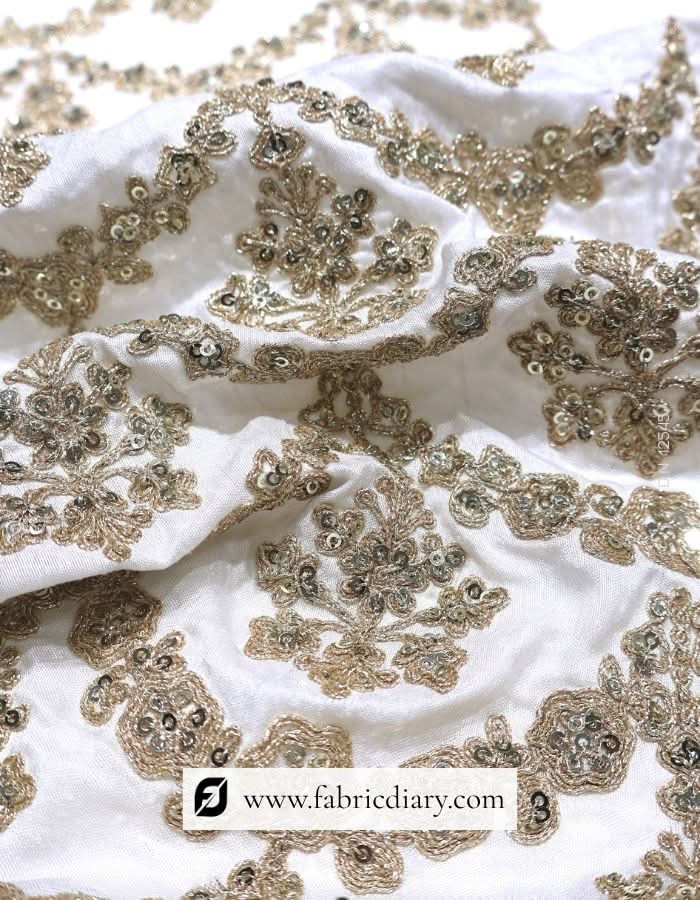
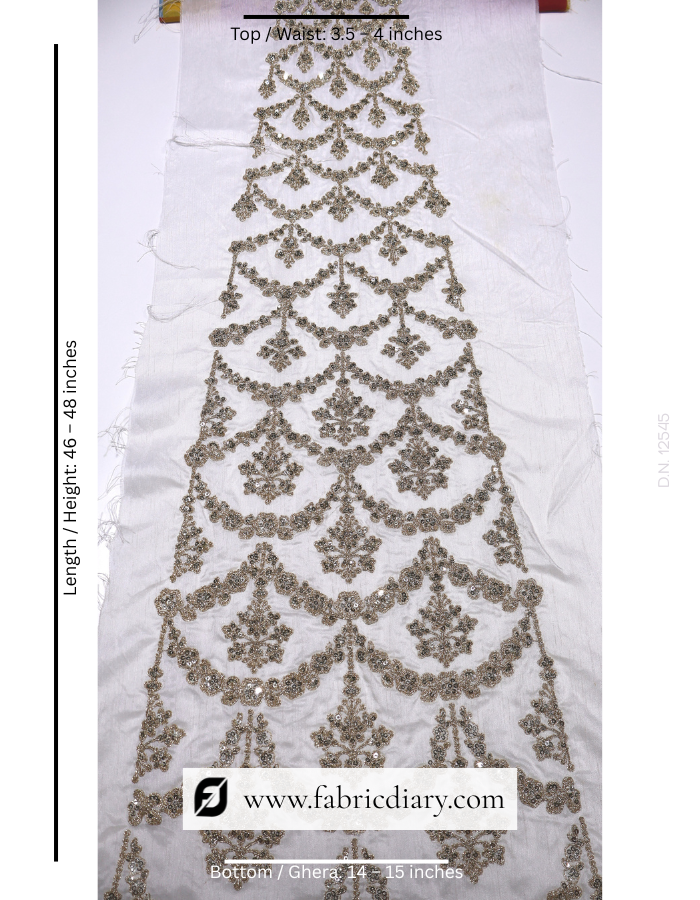
Embroidered Lehenga Kali Fabric with Golden Cording & 3mm Sequins for #12545


Dola Silk Chikankari Embroidery Fabric for Saree Wholesale - 11914


Golden Zariwork Embroidered Dola Silk Fabric #13771
- Featured
- Most relevant
- Best selling
- Alphabetically, A-Z
- Alphabetically, Z-A
- Price, low to high
- Price, high to low
- Date, old to new
- Date, new to old
A fabric can look luxurious on a sample table and still become difficult to manufacture with once it reaches cutting, embroidery and garment production. Dola Silk is interesting precisely because it sits between those two realities. Its silk-like surface, soft movement and controlled sheen give designers a premium visual base, while its construction can be adapted for commercial fashion programs that need repeatable production rather than one-off artisanal pieces.
Embroidered Dola Silk Fabric brings an additional layer of design value to that base. Instead of relying only on the inherent appearance of the fabric, embroidery can introduce floral movement, tonal texture, ornamental borders, resham detailing, zari-inspired accents or carefully controlled surface motifs. The result is particularly useful when a brand wants an occasionwear textile that feels richer than a plain silk-look fabric but does not necessarily require the weight or visual intensity of heavily embellished textiles.


Within the wider Embroidered Fabric collection, Dola Silk occupies a distinctive position because the base fabric itself contributes substantially to the finished appearance. That changes how buyers should evaluate it. Embroidery density matters, but so do the softness of the base, surface uniformity, dimensional stability, color continuity and the way the cloth falls after stitching.
Dola Silk is also a commercially flexible textile in the Indian market. It appears across sarees, blouse materials, festive garments and occasionwear, with different suppliers using the name for somewhat different constructions. Current Indian trade listings, for example, describe Dola Silk around lightweight silk-like apparel fabrics, while Surat saree suppliers also market heavier Dola constructions with zari, jacquard and embroidered detailing.
For an international buyer, this makes specification particularly important. “Dola Silk” should not be treated as a sufficient technical description by itself. A professional purchase specification should identify the actual fibre or blend, construction, width, GSM, finish, embroidery technique and intended garment.
FabricDiary approaches the category from that sourcing perspective. The platform operates from Surat, India, with factory-direct textile manufacturing and B2B supply capabilities, including small sample quantities and larger production programs. FabricDiary states that it supplies fabrics to global markets and supports custom development.
The commercial opportunity is therefore broader than a single ethnicwear market. A well-developed embroidered Dola Silk can move from an Indian festive blouse to a South Asian wedding saree, a Middle Eastern occasion garment, a contemporary evening jacket or a globally positioned capsule collection.
What Is Embroidered Dola Silk Fabric?
Embroidered Dola Silk Fabric is a Dola Silk textile enhanced with decorative embroidery designed according to the intended garment, market and visual direction.
The important point is that Dola Silk describes the base textile, while embroidery describes the surface development. The two should be evaluated separately before they are considered as one finished fabric.
In the Indian textile trade, Dola Silk is commonly associated with a soft, silk-like appearance, fluid hand and moderate lustre. However, the term is not a universal fibre classification. Depending on the supplier and market, Dola Silk may refer to viscose-based or blended silk-look constructions, and trade specifications can vary considerably. One current Surat listing, for example, gives a 45-inch width and an indicative 120–150 GSM range, while other Surat listings use Dola Silk for saree constructions with zari or jacquard components.
For this reason, professional sourcing should focus on the measurable specification rather than the name alone.
The embroidery can be developed as:
All-over motifs
Controlled floral repeats
Scattered decorative elements
Border-oriented embroidery
Placement motifs
Tonal thread embroidery
Contrast thread embroidery
Resham-style decorative work
Zari-influenced surface detailing
Embroidery combined with selected embellishment
The most commercially useful designs are those that respect the natural movement of the Dola Silk base. Very dense stitching over an unsuitable construction can change the hand, create puckering or make cutting and stitching unnecessarily difficult. A balanced design instead allows the base fabric and embroidery to work together.
This is what separates a commercially successful Dola Silk embroidery program from simply putting a decorative pattern onto a silk-look fabric.
Key Characteristics
Soft Silk-Like Surface
The principal attraction is the visual and tactile impression of silk. Depending on the construction, Dola Silk can offer a smooth-to-soft hand with a controlled sheen rather than an aggressively reflective surface.
That makes it suitable for buyers who want richness without excessive surface shine.
Fluid Draping
Dola Silk constructions are commonly selected for garments where movement matters. Sarees, blouses, flowing panels, dupattas and occasion dresses can benefit from this characteristic.
Embroidery, however, changes the drape. The heavier the stitch concentration, the more the decorated zone can resist movement. Designers should therefore consider embroidery weight alongside the base fabric.
Moderate Visual Lustre
The base's natural sheen helps embroidery appear integrated rather than sitting completely apart from the fabric. Tonal embroidery can create an understated luxury effect, while contrasting embroidery can produce a stronger fashion statement.
Medium-Light to Medium Commercial Weight
Dola Silk is not one fixed GSM category. Indicative trade listings can sit around 120–150 GSM, but embroidery, backing, weave and finishing can materially change the finished weight.
For export buying, GSM should always be confirmed against the exact sample rather than assumed from the fabric name.
Color Depth
Because the surface has a silk-like visual character, deep jewel tones, traditional festive shades, neutrals and contemporary pastels can all work effectively.
For production, the more important issue is not simply whether a shade looks attractive on one sample. It is whether the same shade can be reproduced consistently across dye lots.
Embroidery-Friendly Base
A stable Dola Silk construction can support thread embroidery effectively, provided the design density and machine settings are matched to the substrate.
The buyer should pay particular attention to puckering, thread tension, needle marks and distortion around high-density areas.
Manufacturing Process
1. Base Fabric Selection
Production starts with the correct Dola Silk construction.
The mill or manufacturer evaluates:
Fibre composition
Yarn characteristics
Weave construction
Width
GSM
Surface finish
Color or RFD status
Shrinkage
Dimensional stability
Embroidery compatibility
This step is more important than it may appear. Two fabrics can both be sold commercially as “Dola Silk” yet behave differently during embroidery and garment cutting.
2. Design Development
The embroidery artwork is converted into a production-ready design.
At this stage, the designer considers:
Motif dimensions
Repeat size
Stitch direction
Thread colors
Density
Border placement
Negative space
Garment cutting requirements
Seam allowance
Fabric movement
For saree programs, placement becomes especially important because the body, border and pallu can require different visual treatment.
3. Digitization and Sampling
For machine embroidery, artwork is digitized into machine-readable instructions.
This determines how the needle moves through the fabric, where stitches begin and finish, how dense each area becomes and how the design behaves at different speeds.
A proper sample is therefore not merely a visual approval. It is a technical test.
4. Embroidery Execution
Commercial Dola Silk embroidery is generally more suitable for controlled machine production when consistency and repeatability are important.
Depending on the design, thread embroidery can be combined with selected decorative elements. Handwork may be introduced where the product positioning specifically demands artisanal irregularity or additional detailing.
The objective should always be compatibility between embroidery load and fabric construction.
5. Finishing
After embroidery, the fabric may undergo trimming, cleaning, pressing and other finishing processes depending on construction.
Finishing should preserve the softness and fall of the base instead of flattening or distorting the embroidery.
6. Inspection
The final roll is checked for:
Missing stitches
Broken threads
Uneven embroidery
Puckering
Needle damage
Color variation
Width variation
Surface contamination
Repeat alignment
Edge defects
Excess loose threads
For export production, inspection before cutting is particularly important because a defect hidden inside a large repeat can create considerable garment wastage.
Common Base Fabrics
Dola Silk itself is the primary base for this collection. However, buyers should understand that embroidery programs may sometimes be developed alongside related luxury constructions.
Dola Silk
The most direct choice. Its soft movement and silk-like surface make it suitable for festive and occasionwear where the embroidery should enhance rather than completely dominate the textile.
Satin
Satin can be considered where a smoother, more reflective surface is required. It creates a sharper contrast with embroidery and may suit eveningwear, statement blouses and contemporary occasion pieces.
Jacquard
Jacquard can be relevant when the designer wants woven pattern and embroidery to coexist. FabricDiary's broader collection includes Dola Silk and Dola Silk position-print/jacquard-related constructions, making this a useful adjacent development route for coordinated collections.
Organza
Organza is relevant mainly when the Dola-inspired visual direction needs to be translated into a lighter, more structured or translucent component. It should not be treated as interchangeable with Dola Silk.
Garment Applications
Sarees
Sarees are one of the most natural commercial applications for embroidered Dola Silk. The fabric can support body embroidery, decorative borders, pallu development and coordinated blouse pieces.
Blouses
The combination of a soft silk-like base and embroidery makes Dola Silk particularly useful for designer blouse programs. It can be developed for bridal, festive, reception and contemporary saree styling.
FabricDiary maintains a dedicated Blouse Embroidery Fabric collection for buyers comparing different embroidery bases and blouse-specific constructions.
Lehengas
Dola Silk can work for selected lehenga components where the designer wants fluidity rather than a very stiff silhouette. Embroidery density should be matched carefully to the required flare and construction.
Gowns and Dresses
For international buyers, this is where the textile becomes particularly interesting. A Dola Silk surface can translate traditional embroidery language into evening dresses, panels, sleeves and contemporary occasionwear.
Dupattas
Lighter embroidery layouts can be effective for dupattas where the fabric needs to remain mobile and comfortable.
Jackets
Dola Silk can also be used for fashion jackets and occasion layers, especially when embroidery is concentrated around fronts, cuffs, collars or back panels.
Why Fashion Brands Use Embroidered Dola Silk Fabric
The commercial strength of Dola Silk lies in controlled richness.
A brand does not always need a heavily embellished textile to create a premium product. Sometimes the more valuable proposition is a fabric with enough surface character to look elevated while remaining adaptable to different silhouettes.
Dola Silk supports that middle ground.
A designer can develop:
Tonal embroidery for understated luxury
Metallic-inspired embroidery for festive collections
Floral motifs for feminine occasionwear
Geometric motifs for contemporary collections
Border embroidery for sarees
Placement embroidery for premium blouses
Coordinated embroidery for capsule collections
This flexibility also helps brands build multiple price points from a related design language.
For example, a collection could use lighter embroidery for premium ready-to-wear and increase embroidery coverage for bridal or couture SKUs without completely changing the base story.
That is commercially useful because the same fabric platform can support several product tiers.
Buyer Guide
GSM
A practical development range for many lightweight-to-medium Dola Silk constructions can begin around 110–160 GSM, but this is only an indicative sourcing range. Embroidery weight can push the finished textile higher, and actual Dola Silk specifications vary by construction. A current Surat trade listing, for example, specifies 120–150 GSM and 45-inch width for one Dola Silk product.
For production, approve GSM on the actual pre-production sample.
Width
Widths around 44–45 inches are common in Indian Dola Silk trade listings, but buyers should confirm usable width rather than nominal width.
For sarees and large garments, usable width and embroidery placement can influence cutting efficiency significantly.
MOQ
MOQ should be separated into three stages:
Sampling: 1 meter or a small sample quantity can be useful for hand feel, color and embroidery assessment.
Trial production: approximately 2–24 meters can suit boutiques, designers and small garment programs.
Bulk production: 25 meters and above becomes more practical for commercial garment manufacturing, while custom embroidery development may require a higher production commitment depending on artwork and setup.
FabricDiary currently presents a graduated purchasing structure from 1-meter samples through trial wholesale, semi-wholesale and bulk quantities.
Sampling
A professional sample approval should include:
Base fabric sample
Embroidery strike-off
Full-width sample where possible
Color approval
Wash or care assessment
Final garment trial for important programs
Lead Time
Ready-stock material can move faster than made-to-order embroidery.
For a custom program, buyers should allow time for:
Artwork approval
Digitization
Sampling
Fabric procurement
Embroidery
Finishing
Inspection
Packing
Export dispatch
A realistic planning window for a custom embroidered fabric program can be approximately 3–8 weeks, depending on quantity, design complexity, material availability and production schedule.
Production Planning
Do not calculate fabric requirement only from garment consumption.
Also account for:
Embroidery repeat
Border placement
Pattern matching
Cutting direction
Defect allowance
Shrinkage
Sampling wastage
Panel placement
This is especially important when the embroidery has a directional design.
Global Market Demand
North America
US and Canadian buyers often approach Dola Silk through the language of occasionwear, Indian wedding textiles, luxury ethnicwear and fashion fabric rather than using only the Indian trade name.
The opportunity is strongest in bridal boutiques, South Asian fashion labels, multicultural weddingwear and designer eveningwear.
For this market, documentation should clearly state fibre composition, width, care instructions and country of origin.
Europe
European designers may be more interested in the material's hand, surface and styling potential than the cultural name itself.
“Silk-look embroidered fabric,” “luxury embroidered fashion fabric” and occasionwear fabric can be useful descriptive positioning alongside Dola Silk.
The design direction should generally be more restrained when targeting contemporary European collections: tonal florals, architectural motifs, controlled borders and sophisticated color combinations can broaden application beyond ethnicwear.
Middle East
The Middle East is particularly relevant for premium occasionwear, modest fashion, festive dresses and luxury abaya-adjacent styling.
Here, buyers may prioritize:
Rich surface appearance
Gold and metallic-inspired detailing
Deep colors
Elegant borders
Dense but controlled embroidery
Premium hand feel
Dola Silk can therefore work as a softer alternative to extremely structured luxury bases.
South Asia
India, Pakistan, Bangladesh and nearby South Asian markets understand the Dola Silk name more readily, particularly through saree, blouse and festivewear trade.
The buyer may compare it against Katan-style silk constructions, viscose silk-look fabrics, satin, jacquard and other occasionwear bases.
This makes accurate specification essential: the trade name opens the conversation, but the technical sheet closes the order.
Australia
Australian demand is relevant to South Asian bridalwear, multicultural occasionwear and contemporary designer fashion.
The opportunity is not limited to sarees. Lightweight embroidered Dola Silk can be developed into dresses, blouses, jackets and eventwear suited to a broader wardrobe.
Africa
African buyers often respond strongly to rich color, decorative surface and statement fashion. Dola Silk can be positioned for occasion dresses, coordinated sets, jackets and ceremonial garments where embroidery provides differentiation.
For this market, color continuity and repeat availability can be particularly important because a successful design may need to be reproduced across several garment sizes and production runs.
Quality Evaluation Guide
1. Fabric Stability
Place the fabric flat and examine whether the surface remains even after handling.
Look for:
Rippling
Uneven tension
Bowing
Skewing
Width fluctuation
2. Embroidery Tension
The embroidery should not unnecessarily pull the Dola Silk base.
A high-density motif that creates visible puckering is a production warning.
3. Stitch Consistency
Check whether stitch length and density remain visually consistent throughout the repeat.
Small deviations may become obvious when a large garment is constructed.
4. Thread Security
Inspect the reverse side.
Loose threads, excessive jump stitches and poorly secured ends can create problems during cutting and stitching.
5. Needle Damage
Fine or unstable constructions can show needle marks if machine settings are not correctly calibrated.
Inspect the area around dense motifs carefully.
6. Color Continuity
Compare multiple meters from the same lot rather than judging a single swatch.
For export programs, approve a shade standard before bulk dyeing or embroidery.
7. Repeat Accuracy
For engineered designs, measure repeat distance.
A small repeat deviation can become significant over a full saree, gown panel or coordinated production.
8. Hand Feel After Embroidery
This is one of the most important checks.
The embroidered fabric should still behave like the intended product. If the embroidery makes the fabric excessively rigid, the garment designer may lose the very drape that made Dola Silk attractive.
Custom Development Options
FabricDiary's Dola Silk platform can be approached as a development material rather than only a ready-made fabric category.
OEM Development
A brand can specify its required base, embroidery direction, width, color and production quantity.
ODM Development
For buyers who want a developed design direction without building the complete artwork internally, an existing design language can be adapted into a commercially suitable fabric.
Private Label
Brands can develop exclusive fabric programs around their own motifs, color palette and product positioning.
Exclusive Motifs
Custom floral, paisley, geometric, abstract or culturally inspired artwork can be developed according to the target market.
Color Development
Instead of selecting only catalogue colors, brands can work toward specific shade references for bridal, seasonal or corporate collections.
Sampling Programs
Small development quantities allow the buyer to test:
Hand feel
Embroidery density
Color
Garment construction
Market response
before committing to larger production.
Why Source From India?
India offers an unusual combination of textile depth, embroidery capability, garment manufacturing knowledge and export infrastructure.
For Dola Silk, Surat is particularly relevant because the city's textile ecosystem connects fabric manufacturing, embroidery, dyeing, finishing, wholesale distribution and garment supply chains.
FabricDiary's own manufacturing information describes Madhav Fashion as operating in textile manufacturing since 2005, while FabricDiary was developed as a global sourcing platform from Surat.
The practical advantage is coordination.
A buyer can discuss:
Base fabric
Embroidery artwork
Color
Width
Quantity
Sampling
Finishing
Packing
Export shipment
within a connected textile ecosystem rather than treating each stage as a completely separate sourcing problem.
For international buyers, this can reduce development friction and make small-to-large production scaling more manageable.
Related Fabric Categories
Embroidered Dola Silk belongs naturally within the broader Embroidered Fabric category, but buyers often compare it with other bases and constructions before finalizing a collection.
Embroidered Raw Silk Fabric is useful when a more textured and structured luxury base is required.
Embroidered Georgette Fabric is a better comparison for buyers prioritizing lighter movement and fluid occasionwear.
Saree Embroidery Fabric becomes relevant when the embroidery layout is being developed specifically around saree body, border and pallu requirements.
Jacquard Fabric offers a different route to surface richness because its pattern is built into the weave rather than added entirely through surface embroidery.
Blouse Embroidery Fabric is another useful comparison when the commercial product is being developed around premium blouse manufacturing rather than full-width fabric programs.
Printed and plain fabrics also remain commercially relevant as coordinating materials. FabricDiary's wider catalogue includes Dola Silk in plain, printed and position-print-related formats, allowing designers to build coordinated fabric stories instead of relying on one construction alone.
FAQ
1. What is Embroidered Dola Silk Fabric?
It is Dola Silk fabric enhanced with decorative embroidery. The final construction can vary according to fibre composition, weave, embroidery density, thread and finishing, so buyers should approve the exact technical specification before bulk production.
2. Is Dola Silk the same as pure silk?
Not necessarily. “Dola Silk” is a trade term used for different silk-like constructions, including viscose-based and blended fabrics. Buyers should verify fibre composition rather than assuming the name means 100% silk.
3. What GSM is suitable for embroidered Dola Silk?
A practical starting range can be around 110–160 GSM for lighter-to-medium constructions, but actual GSM varies by supplier, weave and embroidery. One Surat trade listing specifies 120–150 GSM for a Dola Silk fabric.
4. What width is commonly available?
Widths around 44–45 inches are commonly seen in Indian Dola Silk trade listings, although actual usable width should be confirmed for the selected construction.
5. Is embroidered Dola Silk suitable for sarees?
Yes. It is particularly relevant for saree bodies, borders, pallu development and coordinated blouse fabrics when the fabric construction provides the required drape.
6. Can Dola Silk be used for bridal blouses?
Yes. Embroidered Dola Silk can work well for festive and bridal blouses where a soft silk-like surface is preferred over a very rigid base.
7. Can it be used for lehengas?
Yes, particularly for lehenga components where fluid movement is desirable. Embroidery weight should be controlled so the fabric does not become unnecessarily stiff.
8. Is machine embroidery suitable for Dola Silk?
Machine embroidery can be highly suitable for commercial production when the fabric construction, needle, thread tension and embroidery density are correctly calibrated.
9. Can the embroidery design be customized?
Yes. Custom motifs, repeat sizes, thread colors, density and placement can be developed depending on production requirements.
10. Can I develop an exclusive Dola Silk embroidery for my brand?
Yes. Exclusive artwork can be developed as part of an OEM, ODM or private-label program, subject to design, sampling and production requirements.
11. Is sampling available before bulk production?
Sampling is recommended before bulk approval. A sample allows the buyer to evaluate the base fabric, embroidery density, color, hand feel and garment behavior.
12. How should buyers check embroidered Dola Silk quality?
Inspect fabric stability, stitch consistency, puckering, loose threads, needle marks, color continuity, repeat accuracy, usable width and the hand feel after embroidery.
13. Can embroidered Dola Silk be made in custom colors?
Yes, custom color development can be considered for suitable production programs. A physical shade standard should be approved before bulk production.
14. Is Dola Silk suitable for export garments?
Yes, provided the exact fibre composition, construction, colorfastness, dimensional stability, finishing and export documentation meet the buyer's market requirements.
15. What garments can be made from embroidered Dola Silk?
Common possibilities include sarees, blouses, lehengas, gowns, dresses, dupattas, jackets and other festive or occasionwear garments.
16. How does Dola Silk differ from embroidered georgette?
Dola Silk generally provides a more silk-like surface and different hand feel, while georgette is typically selected for its lightweight, fluid and slightly textured character. The correct choice depends on silhouette and intended visual effect.
17. How does it compare with raw silk?
Raw silk generally has a more textured, structured character, while Dola Silk is often chosen for a softer silk-like appearance and fluidity. The two serve different design objectives.
18. What should an international buyer specify when ordering?
At minimum, specify fibre composition, GSM, width, color, embroidery technique, motif size, embroidery density, repeat, finish, quantity and intended garment application.
19. Can small quantities be purchased for development?
Yes. FabricDiary's current purchasing structure includes 1-meter sample quantities and graduated wholesale quantities for larger requirements.
20. Why is Surat relevant for embroidered Dola Silk sourcing?
Surat has a deeply integrated textile manufacturing ecosystem covering fabric production, embroidery, processing, wholesale distribution and export-oriented supply. This makes it a practical sourcing hub for both sampling and scalable production.
Embroidered Dola Silk Fabric is best understood as a silk-look base plus a carefully engineered decorative surface, rather than simply another embroidered textile.
Its commercial value comes from balance.
The Dola Silk base provides softness, movement and visual richness. Embroidery introduces differentiation, but its density, placement and thread selection must respect the behavior of the underlying fabric. That relationship determines whether the final material remains elegant and workable or becomes unnecessarily heavy and difficult to manufacture.
For designers, the category offers flexibility across sarees, blouses, lehengas, dresses, gowns, dupattas and jackets. For sourcing teams, the main priority is specification accuracy: fibre composition, GSM, width, embroidery density, color continuity, repeat, finishing and dimensional stability should all be approved before production.
The global opportunity is equally broad. South Asian buyers may approach Dola Silk through established ethnicwear terminology, while buyers in North America, Europe, the Middle East, Australia and Africa may evaluate it primarily as a luxury occasionwear or silk-look fashion textile.
That difference in terminology does not change the fundamental sourcing principle: the trade name starts the conversation; the technical specification defines the product.
Related Embroidery Collections
Embroidered Fabric
Embroidered Raw Silk Fabric
Embroidered Georgette Fabric
Saree Embroidery Fabric
Blouse Embroidery Fabric
Lehenga Embroidery Fabric
Jacket Embroidery Fabric
Gown Embroidery Fabric
Jacquard Fabric
FabricDiary Global B2B Sourcing Desk
Direct textile manufacturing facility supplying premium fabrics to Apparel Buying Houses, Fashion Merchandisers, Garment Exporters, and Boutique Labels across North America, Europe, the Middle East, and Africa.
Ready Stock MOQ
1 Meter (Immediate Dispatch)
Custom Production MOQ
30 Mtr (Dyes/Prints) | 300 Pcs (Patches)
Trims & Laces MOQ
Standard 9-Meter Rolls
Trade & Shipping Terms
FOB, CIF, DDP Air/Sea Freight
Read More about Embroidered Dola Silk Fabric