
Embroidered Jacquard fabric


Jacquard Tissue Butti Fabric with Beaded Mirror & Zari Embroidery


Jacquard Tissue Bridal Lehenga Fabric with Beaded Zari Work


Designer Gold Tissue Jacquard Zari Mirror Work Daman Fabric for Boutiques - 14841


Heavy Gold Tissue Jacquard Zari Mirror Work Daman Panel Fabric - 14838


Jacquard Gold Tissue Zari Mirror Work Daman Fabric for Bridalwear - 14839


Gold Tissue Jacquard Zari Mirror Work Daman Panel for Lehenga - 14840


Surat Jacquard Gold Tissue Zari Sequins Copper Gota Daman Fabric - 14837


Gold Tissue Jacquard Zari Sequins Copper Gota Daman Panel for Lehenga - 14836
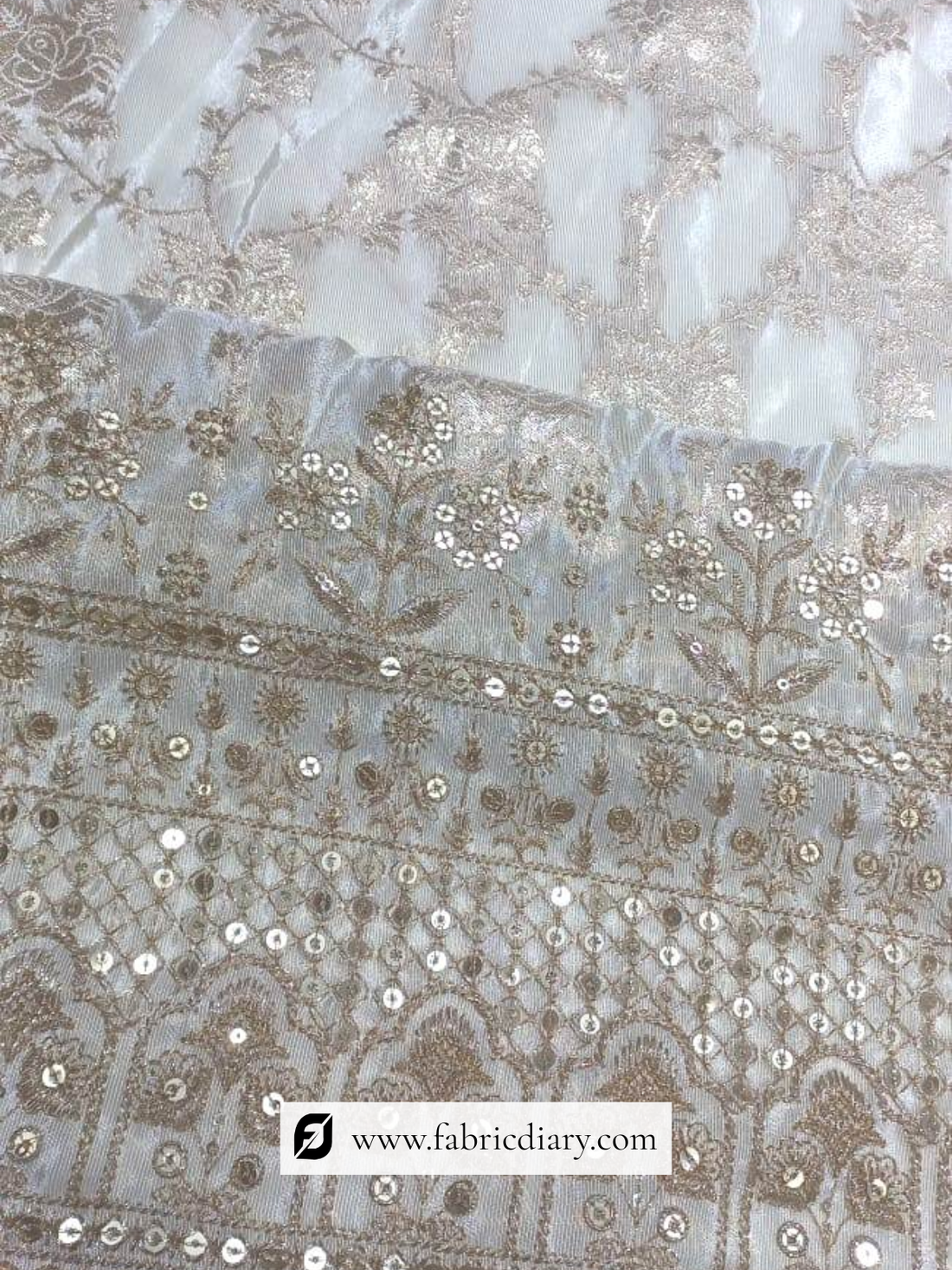
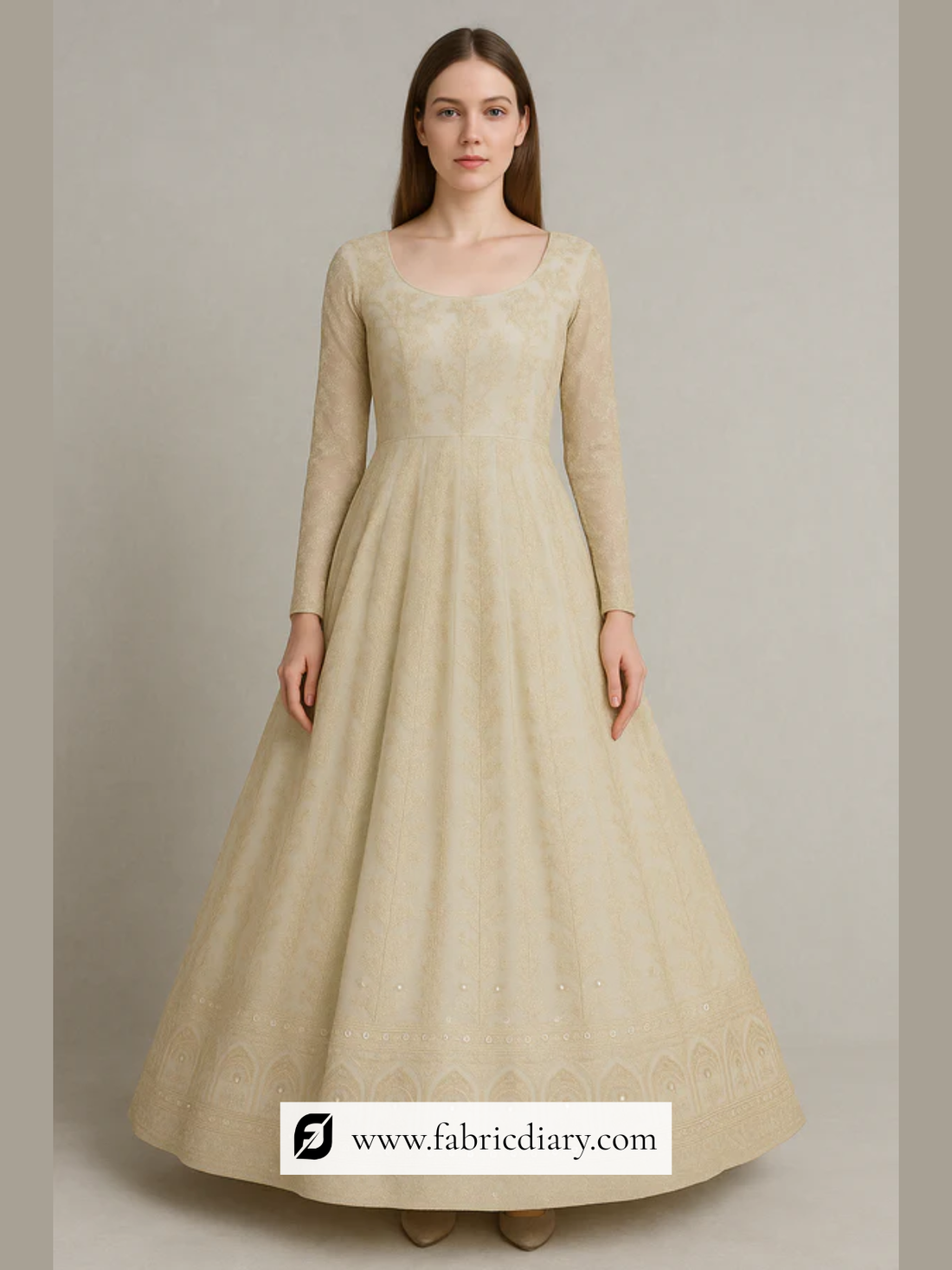
Embroidered Daman Tissue Jacquard Fabric #14250
- Featured
- Most relevant
- Best selling
- Alphabetically, A-Z
- Alphabetically, Z-A
- Price, low to high
- Price, high to low
- Date, old to new
- Date, new to old
Some fabrics create value through softness. Others depend on shine, transparency or surface decoration. Embroidered Jacquard fabric takes a different route: its visual character begins inside the woven structure itself and is then enhanced with embroidery.
That distinction matters when a designer or garment manufacturer is looking for a textile with more body and architectural presence than a conventional embroidered base can provide. Jacquard weaving creates patterned texture through the construction of the cloth, while embroidery adds another layer of definition over that already-developed surface. The result can range from refined tonal detailing to highly decorative fabrics intended for bridal, festive and luxury occasionwear.
For international buyers, this combination also creates practical possibilities. A jacquard base can provide structure to a silhouette, while embroidery can be used to introduce emphasis around motifs, borders, panels or selected garment areas. Depending on yarns, construction and embroidery coverage, the same broad category can serve a sophisticated jacket, an embellished saree, a structured lehenga, a ceremonial menswear garment or a couture-inspired gown.


At FabricDiary, the collection sits naturally within the wider Embroidered Fabric category while retaining its own sourcing identity. FabricDiary operates as a global fabric sourcing platform, while its manufacturing background is connected with Madhav Fashion, whose textile manufacturing operations provide the production foundation behind the broader fabric business.
For buyers, that relationship is important because embroidered jacquard is not simply a decorative textile to be selected from a photograph. The woven base, motif scale, embroidery density, fabric width, weight, finishing and garment construction all need to work together.
That is particularly relevant when purchasing for international production. A fabric that looks impressive on a sample may behave very differently when cut into a fitted jacket, pleated lehenga, structured gown or full-width saree.
The purpose of this guide is therefore broader than defining the fabric. It explains how embroidered jacquard is constructed, where it performs commercially, what buyers should check before production, how different markets approach the category and which specifications should be established before placing a larger order.
What is Embroidered Jacquard fabric?
Embroidered Jacquard fabric is a woven jacquard textile that has been further enhanced with embroidery.
The first layer of design comes from the Jacquard weaving process. Unlike a conventional printed textile, where a motif is applied to the finished surface, a Jacquard loom controls individual warp yarns to create complex woven patterns. Depending on the construction, the pattern can appear through differences in weave, yarn color, texture, float formation or surface relief.
Embroidery is then introduced as a second design layer.
This can involve thread embroidery, zari, metallic yarns, cord-like details, decorative stitching or selected embellishment techniques depending on the intended product. The embroidery may be developed across the full surface or concentrated into motifs, borders, panels or garment-specific placements.
This two-stage construction gives the category its distinctive commercial character.
A plain base relies almost entirely on embroidery for surface interest. A Jacquard base already has visual information before the embroidery begins. The embroidery can therefore be used to reinforce selected elements rather than carrying the entire design burden.
That creates several possibilities for textile designers:
Tone-on-tone embroidery for understated luxury
Contrast embroidery for stronger motif definition
Metallic embroidery for ceremonial garments
Floral embroidery over woven floral structures
Geometric embroidery over architectural Jacquard patterns
Border-focused developments for sarees and lehengas
Panel-oriented designs for jackets and structured garments
The fabric should therefore be understood as a construction-plus-surface-development category, rather than simply another embroidery technique.
For sourcing teams, the distinction is useful. When evaluating a sample, buyers need to assess both the underlying Jacquard construction and the embroidery program. A technically attractive embroidery pattern cannot compensate for an unsuitable base, and an excellent Jacquard weave can lose its commercial value if the embroidery distorts the fabric or interferes with garment cutting.
Key Characteristics
Woven depth before embroidery
The most important characteristic is that the fabric already contains a woven pattern.
This gives embroidered Jacquard a different visual foundation from embroidery developed on a flat, visually neutral base. Even where the embroidery is relatively restrained, the woven pattern can continue to create depth underneath.
Structured surface
Jacquard generally provides more body than many lightweight embroidery bases. The actual hand feel varies substantially according to fiber composition, weave density and finishing.
A lightweight Jacquard can remain suitable for fluid garments, while heavier constructions may work better for jackets, structured ethnicwear, formalwear or statement pieces.
Strong motif definition
Woven motifs tend to remain visually stable across the surface because the design is part of the fabric construction. When embroidery is carefully coordinated with those motifs, the finished textile can achieve unusually strong pattern definition.
Controlled visual richness
Embroidered Jacquard does not always need extremely dense embroidery to appear premium.
The woven texture itself contributes to the finished appearance. This allows designers to explore restrained embroidery programs where the objective is sophistication rather than maximum surface coverage.
Better architectural potential
Compared with very soft and fluid bases, suitable Jacquard constructions can support garments that require more shape.
This is particularly useful for:
Structured jackets
Waistcoats
Sherwanis
Corseted bodices
Structured lehengas
Formal dresses
Statement skirts
Weight variation
There is no single universal GSM for embroidered Jacquard.
A lightweight fashion Jacquard may be around 100–160 GSM before significant surface work, while medium constructions can move into approximately 160–250 GSM. Heavier ceremonial or structured developments can exceed 250 GSM once the base and embroidery are considered together.
The exact finished GSM should always be confirmed from the actual production sample rather than assumed from the category name.
Manufacturing Process
The quality of embroidered Jacquard is largely determined before the embroidery machine begins working.
1. Base construction selection
The first decision is the Jacquard construction.
The manufacturer evaluates:
Fiber composition
Yarn count
Warp and weft characteristics
Weave complexity
Surface texture
Finished width
Weight
Intended garment
Required drape
Expected embroidery load
A lightweight dress fabric requires a different construction from a Jacquard intended for a structured sherwani or jacket.
2. Jacquard design development
The woven pattern is converted into a loom-ready construction.
At this stage, designers and technicians determine how the motif will be expressed through yarn arrangement and weave structure.
This is one of the defining differences between embroidered Jacquard and printed embroidered fabric. The pattern cannot simply be treated as surface artwork; the woven design must be engineered into the fabric itself.
3. Weaving
The Jacquard loom creates the base textile according to the approved construction.
Production control at this stage focuses on:
Pattern repeat
Width
Weave consistency
Yarn tension
Surface defects
Motif registration
Selvedge condition
Fabric stability
A small weaving inconsistency can become much more noticeable after embroidery is added.
4. Embroidery design preparation
The embroidery artwork is digitized according to the selected machine, thread and fabric construction.
The embroidery program should take the Jacquard surface into account.
This is important because a dense woven texture may already create resistance and surface irregularity. Embroidery density that works perfectly on a plain satin or lightweight woven base may not produce the same result on a textured Jacquard.
5. Thread and embroidery selection
Thread selection depends on the desired visual effect.
Common directions include:
Polyester embroidery thread
Rayon-style decorative thread
Metallic or zari-effect yarns
Cotton thread for selected natural-fabric developments
Blended decorative thread combinations
The choice affects shine, softness, abrasion resistance and overall appearance.
6. Embroidery execution
Depending on the design, embroidery can be applied as allover work, repeated motifs, border development or selected placements.
Machine embroidery is generally preferred for scalable commercial production because it offers repeatability across production lots.
Hand-developed details may be introduced for specialized premium programs, but they should be treated as a separate production specification rather than assumed as part of every embroidered Jacquard fabric.
7. Finishing
After embroidery, the fabric may undergo finishing processes designed to improve handle, appearance, dimensional stability and presentation.
The exact process depends on fiber content and construction.
Potential considerations include:
Relaxation
Pressing
Surface cleaning
Softening
Heat setting where appropriate
Final width control
Edge inspection
8. Final inspection
Inspection should evaluate the textile as a complete construction rather than checking embroidery alone.
The final fabric should be reviewed for:
Weaving faults
Embroidery skips
Broken threads
Uneven stitch density
Pattern distortion
Width variation
Shade variation
Surface snagging
Unwanted puckering
Excessive tension
Repeat consistency
For export production, inspection standards should ideally be agreed before bulk manufacturing begins.
Common Base Fabrics of Fabricdiary
Because Jacquard is itself a woven construction, buyers should think in terms of Jacquard fiber and construction families rather than assuming every embroidered Jacquard behaves alike.
Silk and Silk-Blend Jacquard
Silk and silk-blend Jacquards are positioned toward premium occasionwear and ceremonial fashion.
They can provide a rich hand feel and sophisticated surface, particularly when embroidery is developed in tonal or metallic directions.
Typical applications include:
Bridal garments
Luxury sarees
Designer jackets
Couture-inspired dresses
Sherwanis
Satin Jacquard
Satin-based Jacquards combine woven patterning with a smoother, more reflective surface.
They are useful when the design requires a more polished appearance without sacrificing the patterned character of Jacquard.
Tissue Jacquard
Tissue constructions can introduce a luminous surface and are particularly relevant to festive and ceremonial fashion.
When combined with embroidery, the result can become highly decorative, making fabric weight and embroidery balance especially important.
Cotton Jacquard
Cotton Jacquards are useful where the designer wants woven pattern and embroidery without the visual formality of silk-oriented constructions.
They can support contemporary ethnicwear, premium casualwear and selected resort or lifestyle garments.
Velvet Jacquard
Velvet Jacquard already possesses a strong surface character through pile construction and woven pattern development.
Embroidery on this type of base must be carefully engineered because the pile and fabric thickness influence stitch penetration and visual clarity.
Garment Applications
Embroidered Jacquard is particularly valuable where the garment benefits from surface richness plus structure.
Bridalwear
Bridal designers can use embroidered Jacquard for bodices, blouses, lehenga components, jackets and structured ensembles.
Its appeal comes from the combination of woven pattern and embroidery rather than embroidery alone.
Sarees
Jacquard provides an interesting foundation for sarees because the woven pattern can remain visible throughout the drape while embroidery introduces selected emphasis.
Border development and coordinated pallu designs are particularly commercially relevant.
Lehengas
Medium and heavier Jacquards can provide useful body for lehenga construction.
The buyer should evaluate whether the finished fabric provides the required volume without becoming unnecessarily heavy after embroidery.
Gowns
Structured gowns can benefit from embroidered Jacquard when the design calls for a more architectural silhouette.
For softer evening gowns, lighter constructions may be preferable.
Kurtis
Light and medium embroidered Jacquards can be developed for premium kurtis and festive ethnicwear.
Sherwanis
This is one of the strongest applications for heavier Jacquard constructions.
The woven structure provides a suitable foundation for formal menswear, while embroidery can be used to create refined ceremonial detailing.
Dupattas
Lighter Jacquards can be developed into statement dupattas, particularly when the design requires a textile with more visual body than a conventional sheer embroidery base.
Jackets
Designer jackets, waistcoats and Indo-Western outerwear can make particularly effective use of embroidered Jacquard because the fabric's structure supports garment architecture.
Why Fashion Brands Use Embroidered Jacquard fabric
The commercial advantage is not simply that the fabric looks elaborate.
It gives a brand more design information in one textile.
The woven structure establishes the background. Embroidery can then emphasize selected elements. This gives designers greater control over visual hierarchy.
A brand can therefore develop:
Quiet luxury through tonal construction
Occasionwear through metallic embroidery
Heritage-inspired collections through traditional motifs
Contemporary fashion through geometric Jacquard structures
Menswear through structured woven surfaces
Bridalwear through layered pattern development
There is also a merchandising advantage.
A single base construction can sometimes be developed into multiple coordinated products through changes in embroidery color, motif scale or placement.
That makes embroidered Jacquard useful for capsule collections where the brand wants a recognizable textile language without producing identical garments.
For private-label manufacturers, the category can also help create differentiation from generic wholesale fabrics. The customer sees both the woven construction and the decorative surface, making the textile feel more specifically developed for the collection.
Buyer Guide for Technical Terms By FD
Buying embroidered Jacquard should begin with a technical specification sheet rather than a photograph.
GSM
A practical development range can broadly fall between 120 and 350+ GSM, depending on fiber, weave and embroidery density.
Do not compare GSM between two fabrics without checking composition and construction.
A 180 GSM silk-blend Jacquard and a 180 GSM polyester Jacquard may behave very differently during cutting and stitching.
Width
Commercial fashion widths commonly fall around 44–58 inches, although the actual usable width can be lower after accounting for selvedges and production requirements.
For sarees, lehengas and large garment panels, usable width should be confirmed before production planning.
MOQ
MOQ depends on whether the fabric is:
Ready stock
Existing design
Made to order
Custom woven
Custom embroidered
Fully exclusive development
For a ready-stock sample, small quantities can be practical. For custom weaving and embroidery development, production quantities are normally higher.
A sensible commercial planning structure is:
Sample: 1–3 metres
Development: approximately 5–15 metres
Small production: approximately 25–100 metres
Custom commercial program: 100 metres and above
These are planning ranges, not universal industry rules. Actual MOQ should be confirmed against the construction and development requirements.
Sampling
A serious buyer should test the fabric in the form in which it will actually be used.
At minimum, evaluate:
Fabric hand feel
Embroidery appearance
Drape
Cutting behavior
Stitching behavior
Seam performance
Color under different lighting
Shrinkage or dimensional change
Embroidery stability after handling
Lead Time
Existing designs can move considerably faster than new developments.
For planning purposes, buyers should allow approximately:
Existing ready stock: subject to availability
Existing design production: around 2–4 weeks
Custom embroidery development: around 3–6 weeks
Custom woven plus embroidery development: approximately 5–10 weeks
Complex developments may require more time.
Production Planning
Do not calculate only the garment requirement.
Allow additional fabric for:
Cutting losses
Pattern matching
Motif alignment
Sampling
Testing
Shade control
Production contingencies
This becomes particularly important where the Jacquard repeat must align with garment panels.
Global Market Demand of Fabricdiary Fabric Material
North America
US buyers often approach embroidered Jacquard from a contemporary luxury perspective.
The category fits occasion dresses, statement jackets, bridal capsules, premium separates and culturally inspired collections.
Design teams may use terminology such as embroidered jacquard textile, decorative jacquard fabric or embroidered woven fabric, depending on the product category.
The commercial requirement is often consistency: the fabric must photograph well, cut predictably and maintain a premium appearance at retail scale.
Europe
European buyers tend to place strong emphasis on construction, hand feel, fiber composition and design restraint.
Tonal embroidery, heritage-inspired woven patterns and sophisticated surface development can be particularly relevant to premium fashion.
For European sourcing teams, documentation concerning composition, width, weight, care and finishing can be as important as the visual sample.
Middle East
The Middle Eastern market has strong commercial potential for richer Jacquard constructions.
Abayas, kaftans, long jackets, occasion dresses, bridalwear and ceremonial garments can benefit from the combination of structure and ornamentation.
Gold, metallic, tonal and high-contrast developments may all have commercial relevance depending on the market.
The regional buyer may also search using terms such as luxury Jacquard, embroidered brocade-style fabric, kaftan fabric or Abaya fabric, even when the underlying textile falls within an embroidered Jacquard construction.
South Asia
India, Pakistan, Bangladesh and neighboring South Asian markets have particularly broad applications.
Sarees, lehengas, sherwanis, kurtas, jackets, blouses and festive dresses create multiple demand channels.
Here the distinction between woven design and embroidery is especially important because buyers may compare embroidered Jacquard with brocade, zari fabrics and other structured occasionwear textiles.
Australia
Australian designers often approach the category through occasionwear, bridalwear, resort collections and contemporary cultural fashion.
Lighter constructions can be useful for warm-weather garments, while heavier developments can support statement evening pieces.
Africa
African fashion markets provide an interesting opportunity because structured woven textiles already have strong cultural and commercial relevance.
Embroidered Jacquard can be positioned for occasion dresses, ceremonial garments, jackets, coordinated sets and luxury traditional-modern fashion.
For exporters, color development and motif adaptation can be important because regional design preferences can differ substantially between markets.
Quality Evaluation Guide
A photograph cannot tell a buyer whether an embroidered Jacquard fabric will perform correctly in production.
The following checkpoints are more useful.
1. Woven pattern consistency
Check whether the Jacquard repeat remains consistent from beginning to end.
Look for:
Broken motifs
Uneven repeats
Float problems
Missing yarns
Visible weaving faults
2. Embroidery registration
The embroidery should sit correctly against the woven pattern where the two are intentionally coordinated.
Misalignment can make the fabric look poorly engineered.
3. Stitch density
Excessive embroidery density can create:
Puckering
Excess stiffness
Localized weight
Distortion
Poor drape
Insufficient density can make motifs appear weak.
The correct density depends on the design and base.
4. Fabric stability
Check whether the fabric twists, stretches irregularly or changes dimensions after handling.
This is particularly important for garments requiring accurate panel cutting.
5. Surface snagging
Raised embroidery, metallic yarns and textured Jacquard surfaces can interact with one another.
Rub and handling tests can help identify whether the surface is likely to snag during manufacturing or wear.
6. Color consistency
Inspect the base and embroidery under daylight and artificial lighting.
Metallic threads and reflective surfaces can change visual character considerably depending on illumination.
7. Edge and selvedge quality
Check whether the fabric width remains stable and whether the selvedge can be used effectively during cutting.
8. Finished weight
Always record the finished GSM after embroidery.
A base fabric specification alone does not represent the final garment textile.
Custom Development Options - Fabricdiary
Embroidered Jacquard is particularly suitable for development programs where the buyer wants the fabric to become part of the brand's identity.
OEM Development
A manufacturer can produce a buyer-approved construction and embroidery specification for repeat commercial orders.
ODM Development
Design teams can work from existing manufacturer capabilities and adapt motifs, colors or surface details into a new commercial direction.
Private Label
Private-label brands can develop coordinated fabric programs around their seasonal color palette and garment architecture.
Exclusive Designs
Exclusive motifs can be developed for brands that do not want the same textile appearing across unrelated collections.
Color Development
The same woven pattern can be explored through multiple ground and embroidery color combinations.
Custom Motifs
Floral, geometric, heritage and abstract motifs can be developed according to garment category and market positioning.
Sampling Programs
For serious production buyers, a staged sampling process is often more efficient:
Concept → artwork → woven sample → embroidery sample → garment trial → production approval
This reduces the risk of discovering construction problems only after bulk manufacturing begins.
Why Source From India - FabricDiary
India's advantage in embroidered Jacquard is not based on one manufacturing technique.
It comes from the combination of weaving, embroidery, dyeing, finishing, garment manufacturing and textile trading ecosystems operating close to one another.
Surat
Surat is particularly relevant to fashion fabric sourcing because the city has a deep ecosystem across synthetic textiles, weaving, embroidery, dyeing, processing and wholesale distribution.
For buyers, geographic concentration can reduce coordination between separate vendors.
A fabric development can move through multiple stages within a connected manufacturing network rather than requiring every operation to be sourced from a different country.
Manufacturing scalability
Indian textile manufacturers can support different levels of production, from development quantities to commercial runs.
This is valuable for brands that want to test a design before committing to larger volumes.
Design flexibility
Indian manufacturers work across traditional and contemporary motifs, allowing embroidered Jacquard to move between ethnicwear, bridalwear, occasionwear and international fashion.
Export experience
India's established textile export ecosystem provides access to freight forwarding, customs documentation, commercial packing and international logistics.
For global buyers, this reduces the friction involved in moving from sample development to repeat production.
Related Fabric Categories
Embroidered Jacquard should be understood within a broader textile sourcing architecture.
Embroidered Fabric is the parent category for decorative textile constructions, while Jacquard Fabric represents the woven foundation and design structure.
It also sits commercially close to:
Printed Fabric
Plain Fabric
Embroidered Velvet Fabric
Embroidered Dola Silk Fabric
Embroidered Tissue Fabric
For buyers comparing construction options, the important question is not simply which fabric looks more luxurious. It is which textile provides the correct combination of structure, surface detail, drape, production efficiency and target-market positioning.
---
FAQ
1. What is embroidered Jacquard fabric?
Embroidered Jacquard fabric is a Jacquard-woven textile that has been enhanced with decorative embroidery. The woven pattern forms the base visual structure while embroidery adds additional surface detail.
2. Is Jacquard embroidery woven or stitched?
The Jacquard pattern is created through weaving, while the additional decorative design is created through embroidery. The finished fabric therefore combines two separate textile-development processes.
3. Is embroidered Jacquard fabric heavy?
It can be lightweight, medium weight or heavy depending on the Jacquard construction, fiber composition and embroidery density. Finished GSM should always be checked against the actual sample.
4. Is embroidered Jacquard suitable for bridalwear?
Yes. Medium and heavier constructions can work particularly well for bridal lehengas, jackets, blouses and structured ceremonial garments.
5. Can embroidered Jacquard be used for sarees?
Yes. Suitable constructions can be developed for sarees, especially where the designer wants woven pattern depth combined with decorative embroidery.
6. Is embroidered Jacquard suitable for sherwanis?
Yes. Structured Jacquard constructions are particularly relevant to sherwanis, waistcoats and formal menswear because they can provide body and a rich surface.
7. Can the embroidery design be customized?
Yes. Custom development can include embroidery motifs, thread colors, embroidery density, placement and coordination with the underlying Jacquard pattern.
8. Can the Jacquard base itself be customized?
For suitable production quantities, buyers can develop custom woven patterns, fiber combinations, colors and constructions before adding embroidery.
9. What GSM is best for embroidered Jacquard?
There is no single ideal GSM. Lightweight garments may require approximately 120–180 GSM, while structured occasionwear may require 180–300 GSM or more. The garment construction should determine the target weight.
10. What width is normally available?
Fashion Jacquards are commonly developed in approximately 44–58 inch widths, although actual usable width depends on the construction and selvedge.
11. Is machine embroidery used on Jacquard fabric?
Yes. Machine embroidery is widely suitable for commercial production because it provides repeatability and controlled stitch execution.
12. Can metallic embroidery be used on Jacquard?
Yes. Metallic or zari-effect embroidery can be used where the construction and design support it. Stitch tension and density should be tested because metallic threads can behave differently from standard embroidery threads.
13. Is embroidered Jacquard suitable for jackets?
It is one of the stronger applications. The structured nature of many Jacquard constructions works well with jackets, waistcoats, formal outerwear and Indo-Western garments.
14. Can embroidered Jacquard be used for gowns?
Yes. Lighter or medium constructions can be used for gowns where the designer wants more structure and surface depth than a very fluid base provides.
15. How should buyers test an embroidered Jacquard sample?
The sample should be evaluated for GSM, width, drape, color, embroidery stability, cutting behavior, seam performance, dimensional stability and surface snagging.
16. What is the difference between embroidered Jacquard and printed Jacquard?
In printed Jacquard, the decorative color or artwork is applied to the woven surface. In embroidered Jacquard, additional stitching is physically added to the woven textile.
17. What is the difference between embroidered Jacquard and ordinary embroidered fabric?
Ordinary embroidered fabric may use many different bases, including lightweight textiles. Embroidered Jacquard specifically combines embroidery with a Jacquard-woven base, giving the fabric an inherent woven pattern and often greater structural character.
18. Can brands order custom colors?
Yes. Depending on the construction and production quantity, custom ground colors and embroidery thread combinations can be developed for seasonal or private-label programs.
19. Is embroidered Jacquard suitable for export production?
Yes. It can be developed for export-oriented garment programs, provided buyers establish clear specifications for composition, GSM, width, color, embroidery density, finishing and packing before bulk production.
20. What should a buyer confirm before placing a bulk order?
The buyer should confirm the approved sample, composition, GSM, usable width, color standard, embroidery design, repeat, finishing, MOQ, production tolerance, lead time, packing method and inspection requirements.
Embroidered Jacquard occupies an important position between woven textile engineering and decorative surface development.
Its commercial strength comes from the fact that the fabric does not begin as an empty canvas. The Jacquard construction already contributes pattern, texture and body before embroidery is introduced. This allows designers to use embroidery more strategically, whether the objective is understated tonal luxury, ceremonial richness, structured menswear or elaborate bridal fashion.
For sourcing teams, the category demands a more technical evaluation than a photograph or embroidery sample alone can provide. Base construction, GSM, width, woven repeat, embroidery density, thread selection, dimensional stability and final garment behavior all need to be considered together.
That is also what makes the category commercially versatile. A well-developed embroidered Jacquard can move between sarees, lehengas, gowns, jackets, sherwanis, kurtis and other premium garments without losing its fundamental identity.
From India's textile manufacturing ecosystem to international fashion markets in North America, Europe, the Middle East, South Asia, Australia and Africa, the opportunity lies in treating embroidered Jacquard not simply as an embellished fabric, but as a complete textile construction with woven depth and engineered surface detail.
Related Embroidery Collections
Allover Embroidery Fabric
Beaded Embroidery Fabric
Daman Embroidery Fabric
Butta Embroidery Fabric
Butti Embroidery Fabric
Mirror Work Embroidery Fabric
Schiffli Embroidery Fabric
Embroidered Velvet Fabric
Embroidered Dola Silk Fabric
Embroidered Tissue Fabric
FabricDiary Global B2B Sourcing Desk
Direct textile manufacturing facility supplying premium fabrics to Apparel Buying Houses, Fashion Merchandisers, Garment Exporters, and Boutique Labels across North America, Europe, the Middle East, and Africa.
Ready Stock MOQ
1 Meter (Immediate Dispatch)
Custom Production MOQ
30 Mtr (Dyes/Prints) | 300 Pcs (Patches)
Trims & Laces MOQ
Standard 9-Meter Rolls
Trade & Shipping Terms
FOB, CIF, DDP Air/Sea Freight
Read More about Embroidered Jacquard fabric