

Pattern Wise Fabric


Beautiful Hakoba Fabric for Women's Dress #12240


Floral Hakoba Fabric for Exclusive Dress #12239
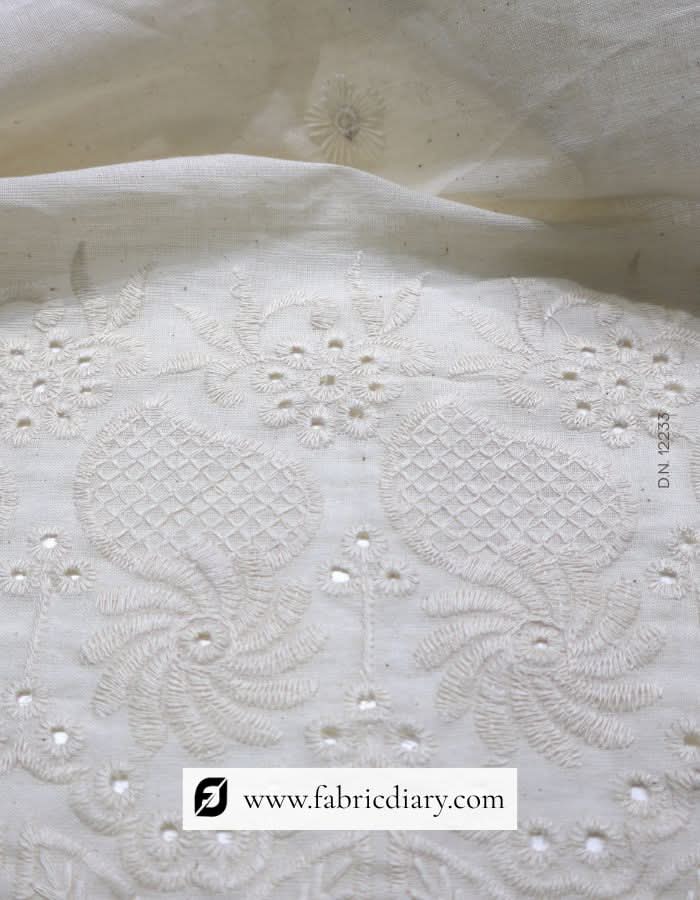

Designer Hakoba Fabric for Premium Women's Dress #12233


Zari Work Designer Butti Fabric #12115


Embroidered Golden Zari Work Butti Fabric #12114


Golden Zari Embroidered Butti Fabric #12113


Designer Embroidered Zari Work Butti Fabric #12073
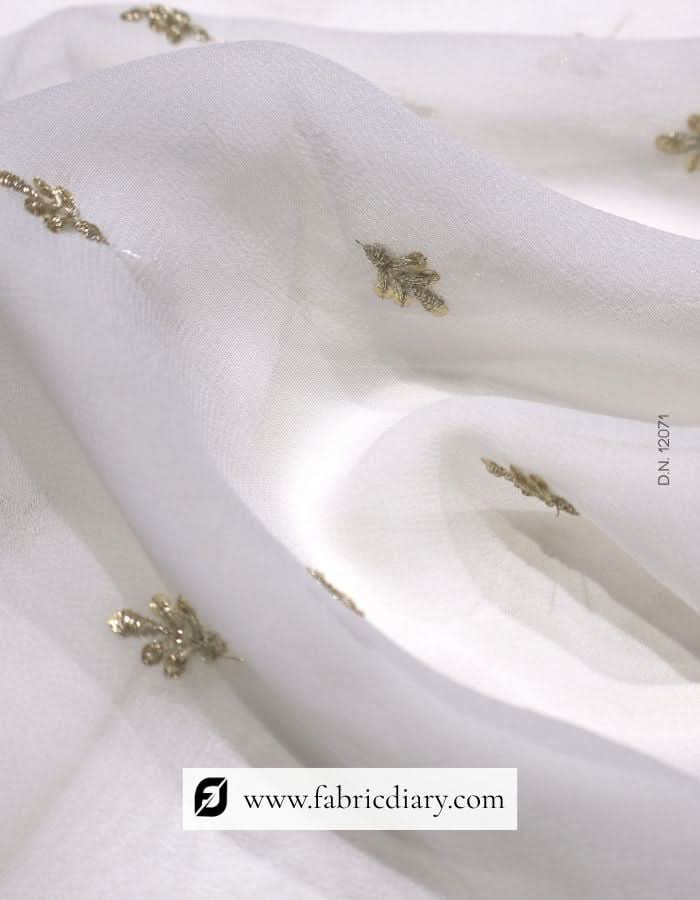
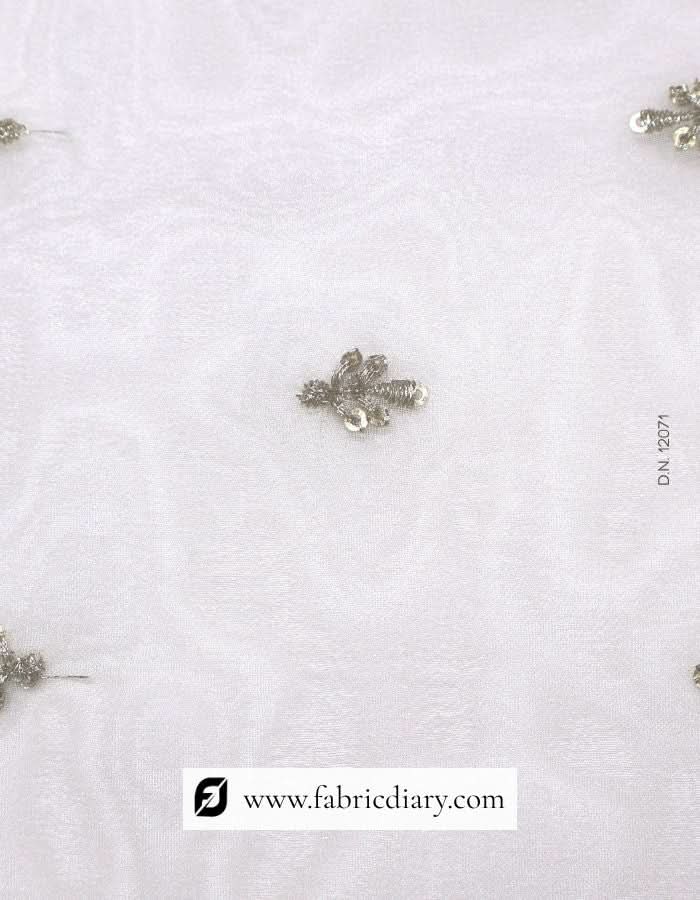
Embroidered Zari Work Butti Fabric #12071


Designer Georgette Embroidered Zari Work Butti Fabric #12069


Chain Stitch Embroidery Fabric in Lining Pattern with Floral Design #12031


Gold & Silver Sequin Daman Fabric for Women's Bridal Lehenga & Partywear Dress #11872


Copper & Gold Sequin Fabric with Daman Embroidery – Perfect for Women's Ethnic Wear #11861
- Featured
- Most relevant
- Best selling
- Alphabetically, A-Z
- Alphabetically, Z-A
- Price, low to high
- Price, high to low
- Date, old to new
- Date, new to old
Choosing an embroidered fabric is not always a question of choosing a base material. For many garment manufacturers, designers and sourcing teams, the more important decision comes earlier: how should the embroidery be distributed across the fabric?
A continuous surface, a scattered motif, a larger individual motif, a concentrated hem design or an embellished border can create very different results from the same basic fabric construction.
That is why Pattern Wise Embroidered Fabric deserves its own sourcing category.
FabricDiary's Pattern Wise Fabric structure brings together embroidery collections according to the way decorative work is positioned, repeated, distributed or developed across the textile. The current FabricDiary catalog places pattern-led collections such as Allover Embroidery, Sequins Embroidery, Mirror Work, Kali, Daman, Butti, Butta, Beaded Embroidery, Embroidered Lace, Schiffli and Hakoba within the embroidered-fabric navigation structure.
This approach is useful for both designers and commercial buyers because pattern choice directly affects garment construction.
An allover design can provide continuous visual coverage and greater freedom during cutting. A Butti design can leave more visual breathing space between motifs. A Daman pattern may concentrate embroidery around the lower part of a garment. Kali-oriented embroidery can be planned around panel construction, while borders and lace can be used specifically around garment edges.
The difference is not merely aesthetic.
Pattern distribution can influence fabric consumption, cutting efficiency, embroidery coverage, stitch count, production cost, motif alignment, garment balance and even the amount of wastage generated during manufacturing.
For a sourcing team, therefore, the right question is not simply:
"Which embroidered fabric looks beautiful?"
The better question is:
"Which embroidery pattern construction is appropriate for the garment we are producing?"
That distinction makes Pattern Wise Fabric an important layer underneath the broader [Embroidered Fabric] category.
FabricDiary's wider catalog already separates fabric by several dimensions, including fabric construction, embroidery, garment application and pattern-related collections. The Pattern Wise category provides another practical way for buyers to narrow that large textile universe.
Whether the requirement is for bridalwear, sarees, lehengas, gowns, dresses, kurtis, dupattas, jackets or contemporary occasionwear, understanding pattern placement before ordering can reduce sampling problems and improve production planning.
What Is Pattern Wise Embroidered Fabric?
Pattern Wise Embroidered Fabric refers to embroidered textiles classified according to the distribution, placement, repetition or visual construction of embroidery across the fabric.
Unlike a fabric-wise classification, where the primary question is whether the base is Chinon, Georgette, Net, Organza, Cotton or another textile, pattern-wise classification asks:
Is the embroidery spread across the full surface?
Are motifs scattered individually?
Are larger motifs repeated at intervals?
Is decoration concentrated near the hem?
Is the embroidery designed around panels?
Does the fabric depend on a border?
Is the visual effect created through sequins, beads, mirrors or cutwork?
Is the embroidery open, dense, raised or reflective?
This makes pattern classification particularly useful for garment development.
For example, a designer developing a flowing gown may prefer an allover embroidered surface. A saree manufacturer may require a scattered Butti body with a decorative border. A lehenga designer may prefer panel-oriented Kali embroidery. A bridal collection may require Beaded or Sequins Embroidery for stronger surface impact.
These are different commercial requirements even when all of them fall under the broad term embroidered fabric.
Pattern-wise terminology can also vary between markets. Indian textile buyers may use established trade expressions such as Butti, Butta, Daman and Kali, while international buyers may describe the same design requirement using terms such as scattered embroidery, placement embroidery, border embroidery, allover embroidery or embellished fabric.
For that reason, a professional sourcing page should explain the construction concept, not depend entirely on terminology.
Why Pattern Classification Matters in Fabric Sourcing
Pattern selection has consequences beyond appearance.
Garment Cutting
A continuous pattern gives the cutter a different level of flexibility from a border or panel-oriented design.
With allover embroidery, motifs can often be positioned across different garment sections without depending on a particular edge.
With placement embroidery, the cutting plan becomes more important.
Fabric Consumption
Pattern density and placement influence how efficiently the fabric can be converted into garment panels.
A large motif may require deliberate positioning to avoid cutting through the most important section of the design.
A concentrated Daman pattern can also create a different consumption calculation from an allover design.
Embroidery Cost
More coverage generally means more embroidery work, although actual cost depends on stitch density, thread, design complexity, embellishments, machine time and finishing.
A lightly scattered Butti pattern and a dense allover pattern may therefore have very different production economics.
Visual Positioning
Pattern determines where the customer's eye goes.
Allover embroidery creates an overall surface effect.
Butti creates rhythm and spacing.
Daman draws attention toward the lower garment.
A border frames an edge.
Beaded or sequined embroidery introduces additional light reflection and surface dimension.
Collection Development
Pattern-wise classification also helps a brand build multiple products from related design directions.
The same floral language, for example, can be adapted into:
Allover embroidery
Butti embroidery
Butta embroidery
Daman embroidery
Border embroidery
Beaded embroidery
This allows a designer to create collection continuity without producing identical garments.
Pattern Wise Embroidered Fabric Collections
1. Allover Embroidery Fabric
Allover Embroidery Fabric is designed around relatively continuous embroidery coverage across the usable fabric surface.
Its commercial advantage is flexibility.
Because decoration is distributed throughout the fabric rather than concentrated exclusively along one edge, the material can often be cut into different garment shapes without depending on a single fixed placement.
This makes allover embroidery particularly relevant for:
Dresses
Gowns
Lehengas
Sarees
Kurtis
Dupattas
Fashion jackets
Occasionwear
The important quality checkpoints are embroidery consistency, motif repetition, stitch density, fabric stability and usable width.
For buyers, the question should not simply be whether the fabric is "allover." Ask how much of the surface is actually embroidered and whether the embroidery remains consistent from one end of the roll to the other.
Explore: Allover Embroidery Fabric Collection
2. Sequins Embroidery Fabric
Sequins Embroidery Fabric introduces reflective embellishment into the embroidery surface.
Its identity comes partly from the way light interacts with the sequins. This makes it especially relevant to partywear, eveningwear, bridal fashion and stage or event garments.
The commercial specification should consider more than sequin size.
Buyers should examine:
Sequin density
Sequin attachment
Thread quality
Embroidery coverage
Base-fabric stability
Reverse-side finishing
Overall fabric weight
Surface flexibility
A heavily embellished sequin fabric can behave very differently from a lightly decorated version.
For a flowing garment, excessive embellishment can reduce movement. For structured occasionwear, that additional weight may be desirable.
Explore: Sequins Embroidery Fabric
3. Mirror Work Embroidery Fabric
Mirror Work Embroidery Fabric is recognized by the use of reflective mirror elements incorporated into embroidery or decorative surface work.
It has a strong connection with festive and ethnic fashion, but contemporary designers can also use mirror details in modern silhouettes.
From a sourcing perspective, the key issue is attachment security.
A buyer should inspect:
Mirror fixing
Embroidery surrounding each mirror
Surface consistency
Mirror size uniformity
Weight distribution
Edge finishing
Handling resistance
Mirror work is particularly suitable where the design brief requires a recognizable decorative statement rather than a subtle tonal surface.
Potential applications include lehengas, festive dresses, ethnic jackets, dupattas, blouses and contemporary fusion garments.
Explore: Mirror Work Embroidery Fabric
4. Kali Embroidery Fabric
Kali embroidery is closely associated with panel-oriented garment construction, particularly garments where individual sections or panels create the final silhouette.
This makes Kali different from a simple scattered motif.
The buyer needs to think about panel alignment and garment construction.
Kali embroidery can be relevant to:
Lehengas
Anarkalis
Long ethnic dresses
Panelled gowns
Flared garments
When developing this type of fabric, motif direction, vertical flow, panel width and joining points become important.
A design may look excellent on the full fabric but lose its intended visual rhythm if the panel is cut incorrectly.
Therefore, sampling should ideally include an actual garment panel rather than relying only on a small fabric swatch.
Explore : Kali embroidery Fabric
5. Daman Embroidery Fabric
Daman embroidery is associated with embroidery concentrated around the lower or hem-oriented portion of the garment or fabric layout.
This makes it particularly useful for designs where the garment's visual weight should increase toward the bottom.
Typical applications include:
Sarees
Lehengas
Anarkalis
Long dresses
Gowns
Dupattas
Daman placement can create a strong transition from a relatively open upper area to a more decorative lower section.
For manufacturers, the key consideration is cutting orientation.
The buyer should confirm:
Daman height
Border width
Motif direction
Repeat
Usable embroidered area
Distance from selvedge
Finished edge requirements
This pattern is especially useful when a designer wants decorative impact without covering the entire garment with embroidery.
Explore: Daman embroidery Fabric
6. Butti Embroidery Fabric
Butti embroidery generally refers to smaller individual motifs distributed across the fabric rather than forming one continuous decorative mass.
The spacing between motifs is an important part of the design.
Butti construction can provide a lighter visual appearance while still giving the garment a clearly embroidered surface.
It is commonly suitable for:
Sarees
Dupattas
Kurtis
Dresses
Blouses
Lightweight ethnicwear
From a production perspective, motif spacing can provide cutting flexibility because the garment manufacturer is not necessarily tied to one continuous design block.
However, consistency remains important.
A buyer should check whether the motif size, spacing and embroidery intensity remain stable across the production roll.
Explore: Butti embroidery Fabric
7. Butta Embroidery Fabric
Butta embroidery generally uses larger and more visually prominent individual motifs compared with the smaller scattered appearance associated with Butti.
The distinction is not an absolute universal textile standard, and terminology can vary between regional markets and suppliers. For commercial sourcing, the actual motif dimensions and repeat should therefore be specified.
Butta embroidery can be useful when the designer wants individual motifs to become a visible feature of the garment.
It can work for:
Sarees
Lehengas
Dupattas
Kurtas
Jackets
Dresses
Blouses
The buyer should consider motif scale against garment size.
A large Butta that looks balanced on a saree may overwhelm a smaller blouse panel.
Explore: Butta embroidery Fabric
8. Beaded Embroidery Fabric
Beaded Embroidery Fabric introduces dimensionality through beads and related decorative elements.
Unlike a simple thread-embroidered surface, beads create additional height, weight and light interaction.
This makes beaded fabric especially relevant to:
Bridalwear
Couture
Eveningwear
Luxury gowns
Premium blouses
Statement jackets
Quality evaluation should focus on attachment security and weight distribution.
The buyer should ask:
Are beads securely attached?
Is the base fabric strong enough?
Are heavier areas balanced?
Can the fabric be handled and packed safely?
Does the embroidery remain comfortable during garment movement?
Is the reverse side suitably finished?
For export buyers, packing and handling become particularly important when the fabric contains substantial three-dimensional embellishment.
Explore: Beaded Embroidery Fabric
9. Embroidered Lace Fabric
Embroidered Lace Fabric occupies a slightly different position within pattern-wise sourcing because its decorative identity often comes from open structures, decorative edges, motifs and lace-like construction.
It can be used as:
Saree borders
Dupatta edges
Sleeve panels
Neckline details
Dress inserts
Bridal trims
Garment overlays
For buyers, width and edge construction can be as important as the embroidery itself.
A lace fabric intended for a border application should be evaluated by its finished edge, repeat, usable width and cutting tolerance.
This makes it different from a conventional allover embroidered fabric intended to be cut freely across the width.
Explore: Embroidered Lace Fabric
10. Schiffli Embroidery Fabric
Schiffli embroidery is associated with decorative embroidery that can incorporate openwork or cutwork effects, creating a lighter and more dimensional appearance.
It is particularly relevant to fashion where designers want embroidery with visual openness rather than a completely dense surface.
Potential applications include:
Dresses
Tops
Kurtis
Summer occasionwear
Lightweight ethnicwear
Fashion overlays
Quality assessment should consider the consistency of the openwork areas, embroidery definition, fabric stability and finishing around cutwork sections.
The balance is important: too much open area can weaken the fabric, while excessive density can reduce the airy character expected from the construction.
Explore: Schiffli Embroidery Fabric collection.
11. Hakoba – Predesign Fabric
Hakoba is commonly associated with decorative cutwork and eyelet-style surface effects, particularly in lightweight fashion textiles.
The commercial appeal lies in the combination of repeated decorative motifs and open areas.
It can be particularly useful for:
Summer dresses
Kurtis
Tops
Lightweight ethnicwear
Resort fashion
Casual occasionwear
Buyers should evaluate the base fabric, cutwork consistency, motif repeat, edge finishing and dimensional stability.
Hakoba should not simply be treated as another name for ordinary embroidery. Its visual identity depends strongly on the relationship between decorated and open areas.
Explore: Hakoba Collection
Pattern Placement vs Embroidery Technique: Understanding the Difference
One of the most common sourcing problems is treating every embroidery term as if it describes the same thing.
It does not.
Some terms describe where the embroidery appears.
Others describe what decorative material is used.
Others describe how the fabric or garment is constructed.
Category Primary idea Example Surface coverage How much of the fabric is decorated Allover Motif distribution How individual motifs are repeated Butti, Butta Placement Where decoration is concentrated Daman Panel orientation How design relates to garment sections Kali Embellishment What is added to the surface Sequins, Beads, Mirrors Openwork Decorative embroidery combined with open areas Schiffli, Hakoba Edge decoration Decorative perimeter or trim construction Lace
This distinction is commercially useful because a fabric can sometimes combine multiple characteristics.
For example:
Allover + Sequins
or
Butti + Beaded
or
Daman + Zari
or
Floral + Schiffli
Therefore, pattern classification should be viewed as a sourcing framework rather than a rigid one-label system.
How Pattern Choice Affects Fabric Cost
Pattern selection can influence cost through several interconnected factors.
Embroidery Coverage
Greater surface coverage generally requires more embroidery work.
Stitch Density
A highly detailed motif can consume considerably more embroidery time than a simple outline.
Motif Complexity
Fine floral, geometric and ornamental designs may require more machine programming and production control.
Embellishment
Sequins, beads and mirrors introduce material costs in addition to embroidery.
Border or Placement Work
Placement embroidery may require greater attention during cutting and production because the design must remain correctly positioned.
Fabric Wastage
Large motifs and fixed borders can create additional cutting considerations.
A manufacturer may need to purchase or reserve more fabric to maintain the intended motif position.
Finishing
Loose threads, backing removal, pressing and inspection also contribute to the final commercial cost.
Consequently, buyers should compare quotations only after confirming that the specifications are equivalent.
A cheaper price for one fabric may simply reflect lower embroidery coverage or a different construction.
Buyer Guide for Pattern Wise Embroidered Fabric
A sourcing team should prepare a proper technical brief before requesting quotations.
1. Identify the Garment First
Tell the supplier whether the fabric is intended for:
Saree
Lehenga
Gown
Dress
Kurti
Dupatta
Blouse
Jacket
Menswear
Bridalwear
The same pattern can require different specifications depending on the garment.
2. Specify the Base Fabric
Pattern alone does not determine fabric performance.
Specify the base such as:
Chinon
Georgette
Net
Organza
Cotton
Silk
Satin
Velvet
Jacquard
where applicable.
FabricDiary's current catalog separates pattern-oriented embroidery collections from fabric-wise collections, including embroidered Chinon, Georgette, Net, Organza, Cotton, Velvet and other constructions.
3. Confirm GSM
Ask whether the quoted GSM refers to the base fabric or the finished embroidered fabric.
This distinction becomes particularly important for sequins and beaded constructions.
4. Confirm Width
Ask for:
Nominal width
Usable width
Embroidered width
Border width where applicable
5. Define Pattern Repeat
For Butti, Butta and allover designs, specify the approximate motif repeat.
For Daman or border constructions, specify the vertical or horizontal placement.
6. Request Sampling
A sample should be evaluated for:
Appearance
Hand feel
Drape
Stitch quality
Color
Embroidery density
Garment suitability
For custom development, a garment panel is often more informative than a tiny swatch.
7. Confirm MOQ
FabricDiary currently presents its broader sourcing model with ready-stock orders from 1 metre, made-to-order quantities from 30 metres and custom programs generally beginning around 100–200 metres, depending on the category and development. Exact MOQ should be confirmed for the selected fabric and design.
8. Confirm Lead Time
Separate:
Sample development
Approval
Bulk production
Finishing
Inspection
Packing
Shipping
This avoids unrealistic delivery expectations.
Quality Evaluation Guide
Pattern-wise fabric requires pattern-specific inspection.
Allover - Check consistency of coverage and repeat across the roll.
Butti - Measure motif spacing at several points.
Butta - Check motif size and orientation.
Daman - Check the exact height and position of the decorative section.
Kali - Check panel width, direction and joining continuity.
Sequins - Check sequin attachment and missing elements.
Beaded - Check bead security and excessive weight.
Mirror Work - Check attachment and breakage.
Lace - Check edge finishing and usable width.
Schiffli - Check openwork consistency and fabric stability.
Hakoba - Check cutwork quality, motif repeat and open-area consistency.
Across every category, buyers should also inspect:
Color consistency
Base-fabric defects
Thread breaks
Puckering
Loose threads
Width variation
Surface contamination
Finishing
Roll-to-roll consistency
The approved sample should remain the production benchmark.
How Pattern-Wise Fabric Supports Fashion Collection Development
Pattern classification can become a design-development tool rather than merely a website taxonomy.
Suppose a brand has developed a floral embroidery concept.
Instead of producing one fabric, the design team could develop several commercial versions:
Version A — Allover
For complete dresses and gowns.
Version B — Butti
For lighter sarees, kurtis and dupattas.
Version C — Butta
For stronger individual motifs.
Version D — Daman
For lehengas and long dresses.
Version E — Beaded
For premium bridal or eveningwear.
The visual language remains related, but the garment applications and price positions change.
This gives fashion brands greater collection depth.
Global Market Perspective
North America
US buyers often approach these fabrics through garment applications rather than Indian trade terminology.
Terms such as embroidered fashion fabric, embellished fabric, embroidered sheer fabric and occasionwear fabric may appear alongside specific construction names.
The sourcing priority is usually the finished specification: composition, width, weight, embellishment and intended garment use.
Europe
European buyers may place stronger emphasis on refinement, surface control, hand feel, sustainability documentation, consistency and understated design.
For premium labels, motif scale and embroidery finishing can be as important as the basic fabric price.
Middle East
The Middle Eastern occasionwear market is particularly relevant for embellished and decorative textiles.
Sequins, Beaded, Mirror Work, Daman and rich allover embroidery can all support different luxury garment directions.
Flowing dresses, kaftans, abayas, gowns and coordinated occasionwear provide opportunities for different pattern constructions.
South Asia
South Asian buyers are more likely to use traditional trade terminology such as Butti, Butta, Daman and Kali alongside broader terms such as embroidered fabric.
Sarees, lehengas, kurtis, dupattas, blouses and ethnic dresses create a wide application base.
Here, pattern terminology can carry practical information for garment manufacturers because cutters and designers often understand placement concepts directly from the name.
Australia
Australian buyers can find pattern-wise fabrics useful for occasionwear, resort fashion, dresses and contemporary ethnic collections.
Lightweight allover embroidery, Schiffli, Hakoba and delicate Butti constructions can be particularly relevant where movement and lighter visual weight are priorities.
Africa
Across African fashion markets, decorative textiles are often important for occasionwear and statement garments.
Color, motif scale and embellishment intensity can be major commercial factors.
Importers may therefore prefer custom development rather than selecting only from a fixed standard range.
Why Source Pattern-Wise Embroidered Fabric From India?
India's textile ecosystem offers an unusual combination of fabric manufacturing, embroidery development, dyeing, finishing, garment production and export capabilities.
For a buyer sourcing multiple pattern types, this ecosystem can simplify development.
Instead of treating Allover, Butti, Daman, Beaded and Sequins as completely separate sourcing projects, a manufacturer can potentially coordinate them through one textile development program.
Surat is particularly relevant because of its established fashion-textile manufacturing ecosystem and its strong network of fabric processors, embroidery units, traders, converters and exporters.
FabricDiary positions its sourcing model around factory-direct wholesale, ready-stock sampling, made-to-order production and custom development, supporting buyers who may need to move from sample quantities toward larger commercial programs.
The value of Indian sourcing is therefore not limited to price.
It also includes:
Design development
Manufacturing scalability
Multiple base fabrics
Embroidery expertise
Color development
Sampling
Custom motifs
Production coordination
Export packaging
International shipping infrastructure
For brands developing several pattern categories simultaneously, that manufacturing depth can be commercially valuable.
Custom Development and Private-Label Programs
Pattern-wise embroidery is particularly suitable for private-label development because the same base concept can be altered through motif scale, placement and embellishment.
OEM
A buyer supplies the design specification and the manufacturer develops it according to agreed production parameters.
ODM
The manufacturer contributes design development based on the buyer's target market and garment category.
Exclusive Motifs
Brands can develop motifs intended exclusively for their own collections.
Custom Pattern Placement
A standard allover design can sometimes be adapted into a border, scattered motif or placement concept, subject to technical feasibility.
Color Development
Thread, embellishment and base-fabric colors can be coordinated with a brand's seasonal palette.
Sampling Programs
Brands can compare several pattern constructions before selecting the final production version.
This approach is particularly useful when the buyer is uncertain whether a collection should use allover, Butti, Butta or placement embroidery.
Related Fabric Categories
Pattern Wise Embroidered Fabric sits underneath the wider Embroidered Fabric category, but it also connects naturally with other textile classifications.
Embroidered Fabric
The primary parent category for decorative embroidered textiles.
Printed Fabric
Useful when the designer wants a surface pattern without physical embroidery.
Jacquard Fabric
Relevant when the pattern is structurally woven into the fabric rather than primarily embroidered onto its surface.
Plain Fabric
Useful as a base or coordinated fabric for garments where embroidered panels are combined with plain sections.
Fabric Wise Embroidery
Pattern classification can be combined with base-fabric classification.
For example:
Allover Embroidered Chinon
Butti Embroidered Georgette
Sequins Embroidered Net
Beaded Embroidered Organza
This creates a more sophisticated textile taxonomy.
A buyer may first choose pattern, then choose base fabric, then choose garment application.
That three-level approach is much closer to how commercial fabric sourcing actually works.
Pattern Wise Fabric and Fabric-Wise Fabric: How They Work Together
A strong textile website should not force buyers to browse through only one navigation path.
One buyer may start with:
"I need embroidered Chinon."
That buyer belongs to a Fabric Wise journey.
Another buyer may start with:
"I need Daman embroidery for a lehenga."
That buyer belongs to a Pattern Wise journey.
Another buyer may search:
"Embroidery fabric for gowns."
That is a Garment Wise journey.
All three can eventually reach the same products.
This is why FabricDiary's category architecture can become significantly stronger when these classifications are connected through contextual internal links rather than isolated collection pages.
The current FabricDiary navigation already includes separate fabric, pattern and garment-oriented embroidery collections, including collections for Sherwani, Lehenga, Kurta, Anarkali, Gown, Kurti, Blouse, Saree, Dupatta, Jacket and Waistcoat embroidery.
The opportunity is to connect these dimensions intelligently.
Frequently Asked Questions
1. What is pattern wise embroidered fabric?
Pattern wise embroidered fabric is a classification system that organizes embroidered textiles according to embroidery distribution, motif placement, repetition, embellishment or construction, such as Allover, Butti, Butta, Daman, Kali, Sequins and Beaded embroidery.
2. What is the difference between fabric-wise and pattern-wise embroidery?
Fabric-wise classification identifies the base textile, such as Chinon, Georgette or Organza. Pattern-wise classification identifies how embroidery is distributed or constructed across that textile.
3. What is allover embroidery fabric?
Allover embroidery fabric has decorative embroidery distributed across most or all of the usable fabric surface, making it suitable for garments requiring continuous surface decoration.
4. What is Butti embroidery fabric?
Butti embroidery generally uses smaller individual motifs distributed across the fabric with visible spacing between them.
5. What is Butta embroidery fabric?
Butta embroidery generally uses larger, more prominent individual motifs. Exact terminology can vary between regional textile markets, so buyers should confirm motif size and repeat.
6. What is Daman embroidery fabric?
Daman embroidery refers to embroidery concentrated around a lower or hem-oriented section of the fabric or garment layout.
7. What is Kali embroidery fabric?
Kali embroidery is associated with panel-oriented garment construction, where embroidery direction and motif placement can be planned around individual garment panels.
8. What is Sequins embroidery fabric used for?
Sequins embroidery fabric is commonly used for partywear, bridalwear, evening dresses, gowns, lehengas and other garments requiring reflective surface decoration.
9. What is Beaded embroidery fabric?
Beaded embroidery fabric combines embroidery with beads or similar dimensional embellishments to create a raised and decorative surface.
10. Is mirror work considered embroidery fabric?
Mirror work can be incorporated into embroidered fabric as a decorative embellishment, with embroidery typically used to secure or frame the mirror elements.
11. What is Schiffli embroidery fabric?
Schiffli embroidery is associated with decorative embroidery that can incorporate openwork or cutwork effects, producing a lighter and more dimensional surface.
12. What is Hakoba fabric?
Hakoba is commonly associated with decorative cutwork and eyelet-style surface effects, particularly in lightweight fashion textiles.
13. Which pattern is best for a lehenga?
The best pattern depends on the garment design. Allover, Kali, Daman, Butta, Sequins and Beaded constructions can all be appropriate for different lehenga styles.
14. Which embroidery pattern is suitable for sarees?
Butti, Butta, Daman, Allover, border and selected embellished constructions can work well for sarees depending on the desired visual balance.
15. Which pattern is best for a flowing gown?
Allover embroidery, lightweight Butti, selected Beaded work and refined Sequins embroidery can be suitable, depending on the required drape and garment weight.
16. Does pattern placement affect fabric consumption?
Yes. Fixed borders, large motifs and panel-oriented patterns can require more deliberate cutting than flexible allover or scattered designs.
17. Can pattern-wise embroidery be customized?
Yes. Depending on the construction, buyers can develop custom motifs, motif sizes, spacing, placement, borders, thread colors and embellishment combinations.
18. Can I order samples of pattern-wise embroidered fabric?
Yes. Sampling is recommended before bulk production, particularly when the design involves custom placement, dense embroidery or dimensional embellishment.
19. How do I compare two embroidered fabrics with different patterns?
Compare the base fabric, GSM, usable width, embroidery coverage, motif size, repeat, stitch density, embellishment weight, finishing, intended garment use and final landed cost.
20. Can one embroidery design be developed in multiple pattern formats?
In some cases, yes. A design concept may be adapted into allover, Butti, Butta, Daman, border or embellished versions, subject to embroidery programming and fabric limitations.
Pattern Wise Embroidered Fabric is more than a collection of embroidery names.
It is a practical way of understanding how decorative work interacts with fabric, garment construction and commercial production.
Allover embroidery provides broad surface coverage. Butti creates spaced motif rhythm. Butta introduces larger individual motifs. Daman concentrates visual weight toward the lower section. Kali relates closely to panel construction. Sequins, mirrors and beads introduce additional forms of surface embellishment, while Lace, Schiffli and Hakoba create different relationships between decoration, openness and fabric structure.
For designers, this classification makes creative planning easier.
For garment manufacturers, it improves cutting and production decisions.
For sourcing teams, it provides a more precise language for quotations, sampling and quality inspection.
And for a global textile platform such as FabricDiary, it creates a stronger bridge between the way buyers search and the way fabrics are actually manufactured.
The most effective sourcing process begins by identifying the garment requirement, then selecting the appropriate pattern construction, base fabric, embroidery density, embellishment level and technical specification.
That is the real purpose of a pattern-wise textile category: not simply to show more fabrics, but to help buyers choose the right construction for the job.
Related Pattern Wise Embroidery Collections
Allover Embroidery Fabric
Sequins Embroidery Fabric
Mirror Work Embroidery Fabric
Kali Embroidery Fabric
Daman Embroidery Fabric
Butti Embroidery Fabric
Butta Embroidery Fabric
Beaded Embroidery Fabric
Embroidered Lace Fabric
Schiffli Embroidery Fabric
Hakoba – Predesign Fabric
Related FabricDiary Categories
Embroidered Fabric
Printed Fabric
Jacquard Fabric
Plain Dyeable Fabric
Fabric Wise
Garment Wise Embroidery Fabric
Embroidered Chinon Fabric
Embroidered Georgette Fabric
Embroidered Net Fabric
Embroidered Organza Fabric
FabricDiary Global B2B Sourcing Desk
Direct textile manufacturing facility supplying premium fabrics to Apparel Buying Houses, Fashion Merchandisers, Garment Exporters, and Boutique Labels across North America, Europe, the Middle East, and Africa.
Ready Stock MOQ
1 Meter (Immediate Dispatch)
Custom Production MOQ
30 Mtr (Dyes/Prints) | 300 Pcs (Patches)
Trims & Laces MOQ
Standard 9-Meter Rolls
Trade & Shipping Terms
FOB, CIF, DDP Air/Sea Freight
Read More about Pattern Wise Fabric