
Jacquard Fabric


Jacquard Tissue Butti Fabric with Beaded Mirror & Zari Embroidery


Jacquard Tissue Bridal Lehenga Fabric with Beaded Zari Work


Designer Gold Tissue Jacquard Zari Mirror Work Daman Fabric for Boutiques - 14841


Heavy Gold Tissue Jacquard Zari Mirror Work Daman Panel Fabric - 14838


Jacquard Gold Tissue Zari Mirror Work Daman Fabric for Bridalwear - 14839


Gold Tissue Jacquard Zari Mirror Work Daman Panel for Lehenga - 14840


Surat Jacquard Gold Tissue Zari Sequins Copper Gota Daman Fabric - 14837


Gold Tissue Jacquard Zari Sequins Copper Gota Daman Panel for Lehenga - 14836


Yellow Position Print Jacquard Fabric for Designer Outfits #SF-748
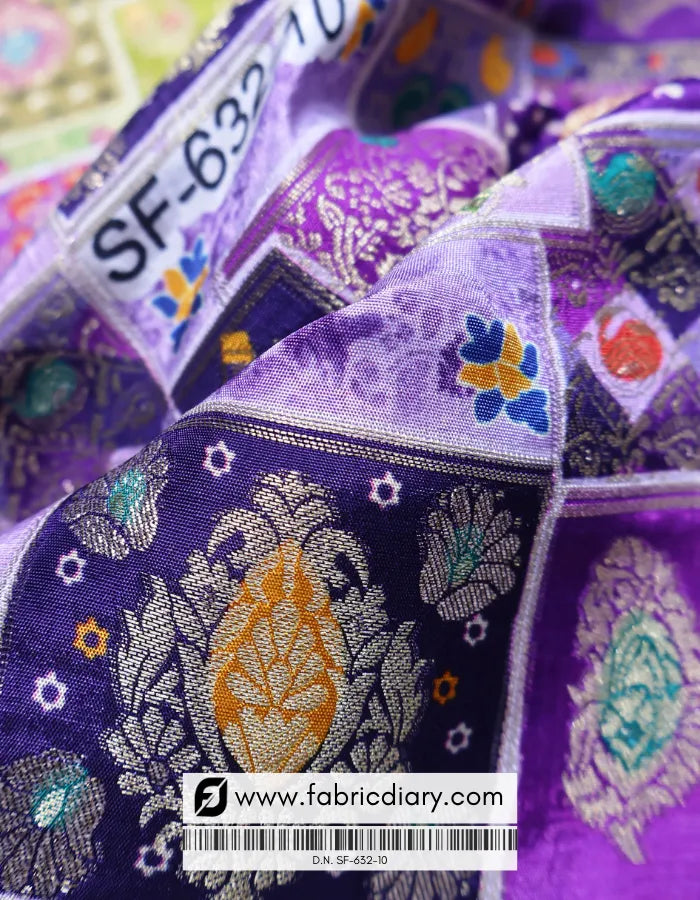
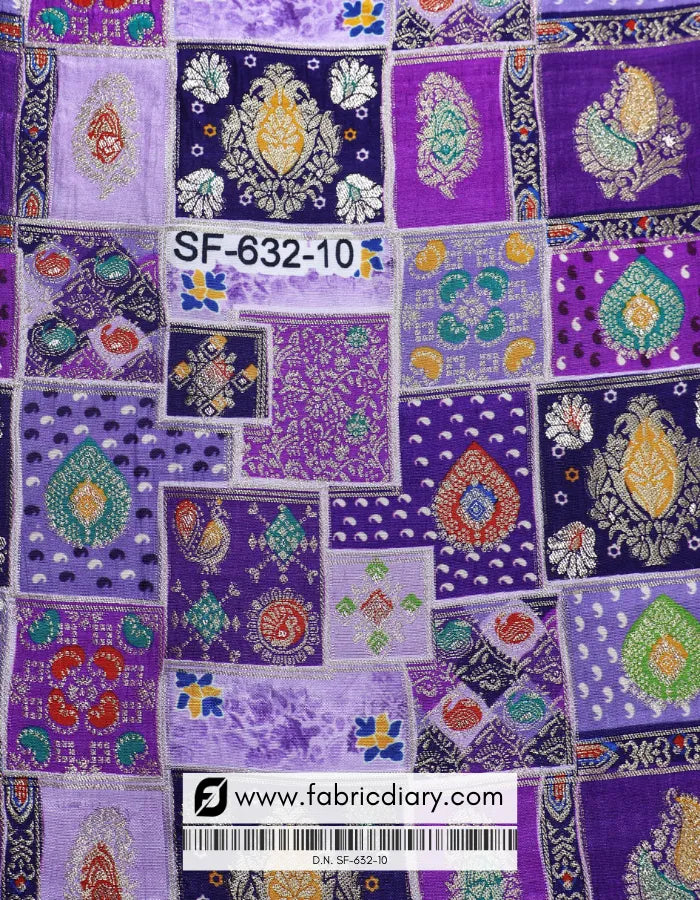
Purple Position Print Jacquard Fabric – Mysore King Style [SF-632-10]
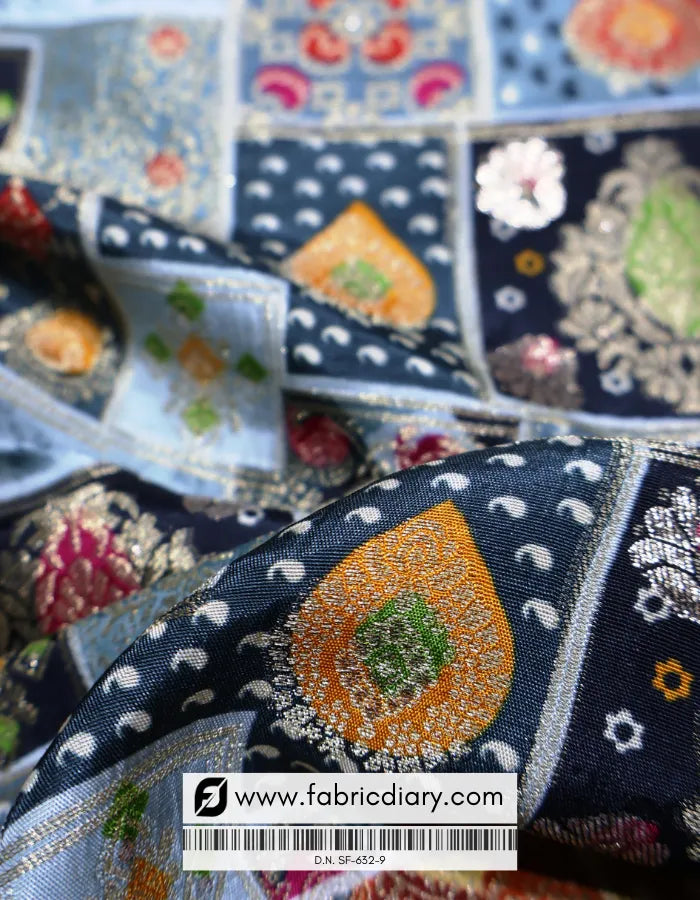
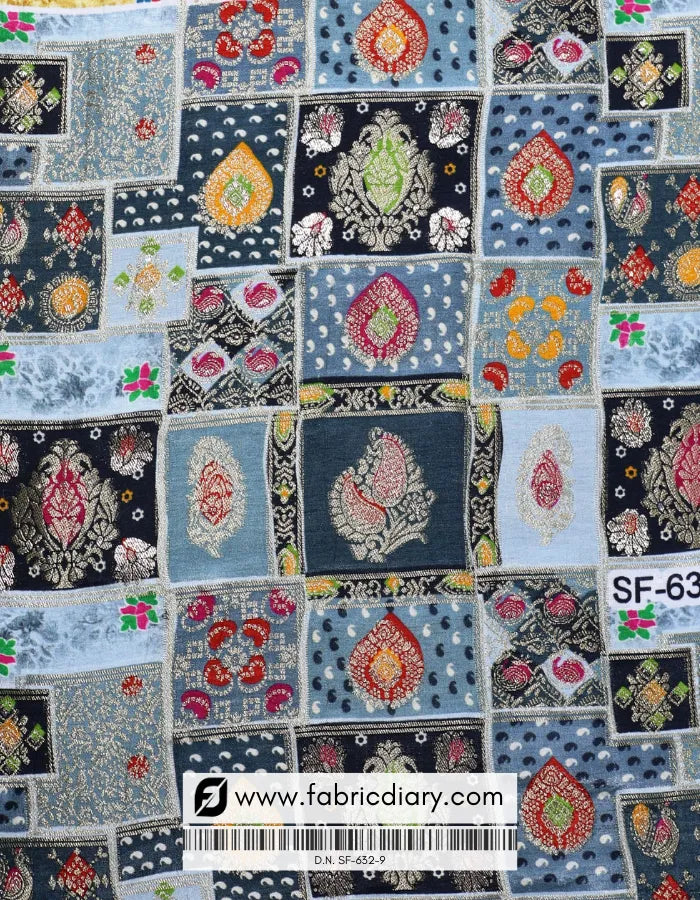
Teal Blue Position Print Jacquard Fabric – Mumbai Fashion [SF-632-9]
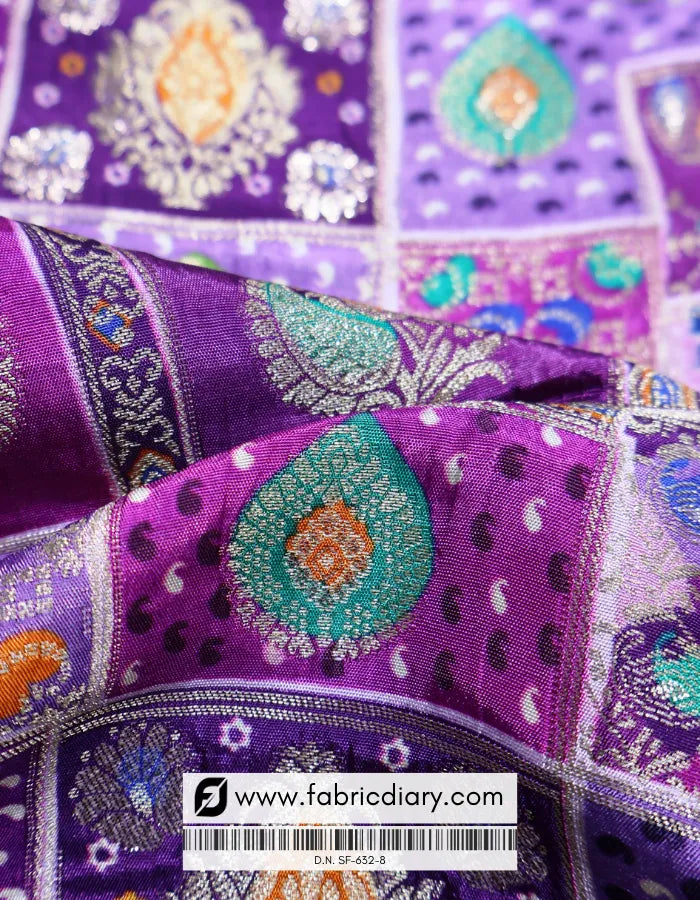
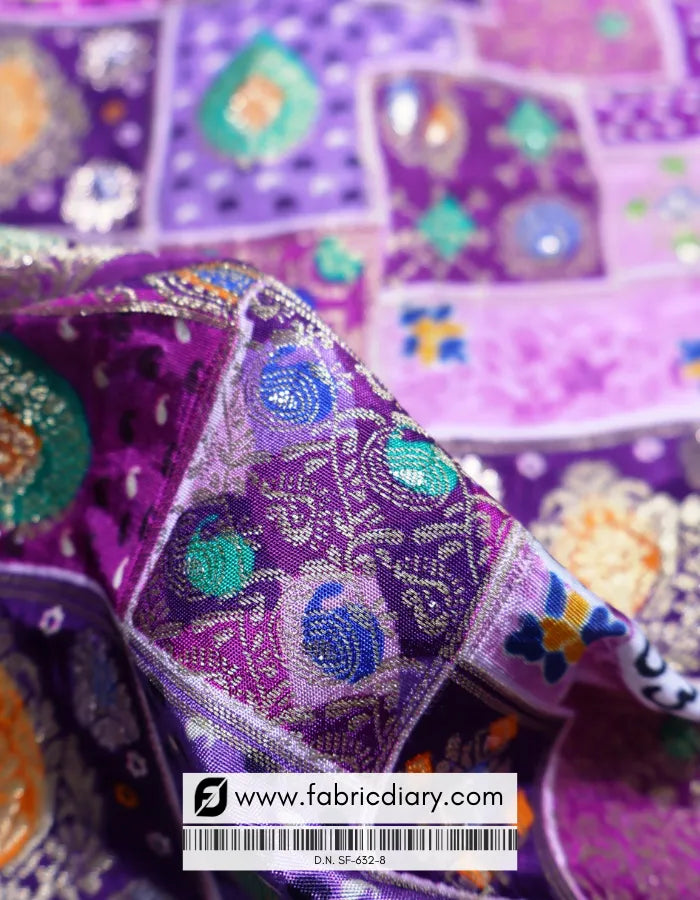
Deep Purple Position Print Jacquard Fabric – Gala Collection [SF-632-8]
- Featured
- Most relevant
- Best selling
- Alphabetically, A-Z
- Alphabetically, Z-A
- Price, low to high
- Price, high to low
- Date, old to new
- Date, new to old
Jacquard is not simply a fabric with a decorative pattern. It is a woven construction in which the design is created through the structure of the weave itself. That distinction is important for designers, garment manufacturers, wholesalers and sourcing teams because a woven pattern behaves differently from a print or surface embellishment.
A Jacquard fabric can carry floral motifs, geometric structures, paisleys, abstract designs, tonal textures, brocade effects, metallic appearances or highly developed woven patterns without relying on a separately printed surface for the primary design.
That makes Jacquard particularly valuable when a garment needs texture, body, visual depth and a more substantial textile character.
At FabricDiary, the Jacquard collection brings together multiple fabric directions rather than treating Jacquard as one single material. The range includes dyeable constructions for colour development, printed Jacquards, embroidered Jacquards, position-print constructions, Dola Silk Jacquard and Tissue Jacquard developments.
This distinction matters commercially.
A designer developing an occasionwear collection may want a luminous Tissue Jacquard. A menswear manufacturer may require a more structured Jacquard for jackets or sherwanis. A boutique may need a smaller quantity to test a collection. A sourcing manager may require a repeatable construction for a larger apparel program.
The fabric may carry the same broad name—Jacquard—but the sourcing decision is completely different.
FabricDiary is built around that practical side of fabric sourcing: buyers can evaluate smaller quantities, request samples where applicable, develop colours or specifications, and move toward larger production once the material has been approved. The current collection already offers purchasing levels ranging from sample quantities through bulk requirements.
What Is Jacquard Fabric?
Jacquard fabric is produced using a Jacquard weaving mechanism that controls individual warp threads or groups of warp threads to create complex woven designs.
Unlike a conventional plain weave where the structure remains visually simple, Jacquard weaving allows the loom to produce considerably more complicated patterns directly within the fabric.
The result can be:
- Raised or recessed visual effects
- Tonal woven patterns
- Floral motifs
- Paisley structures
- Geometric designs
- Brocade-like surfaces
- Reversible pattern effects
- Textured grounds
- Metallic or lustrous woven appearances
The pattern is therefore fundamentally connected to the fabric construction.
This is why Jacquard should not automatically be compared with printed fabric simply because both can display motifs.
A print primarily changes the surface appearance through colour application. Jacquard changes the woven structure and surface architecture of the textile.
For buyers, this difference affects hand feel, thickness, drape, dimensional stability, appearance under light and the overall character of the finished garment.
The exact performance depends on the yarn, fibre, weave structure, GSM, finishing and design density rather than the word "Jacquard" alone.
Jacquard as a Manufacturing Category
From a manufacturing perspective, Jacquard is better understood as a weaving technology and construction family than as one fixed fibre.
Jacquard fabrics can be developed using different fibres and yarn combinations, including viscose-based materials, polyester, cotton, silk-related constructions, blends and specialty yarns.
That is why two Jacquard fabrics can look completely different while both being technically classified as Jacquard.
One may be lightweight and fluid.
Another may be firm and structured.
One may have a subtle tonal pattern.
Another may have a highly contrasting woven motif.
For this reason, professional buyers should never source Jacquard only by name. The actual construction and technical specification need to be evaluated.
Woven Pattern vs Surface Decoration
One of the most useful distinctions for buyers is understanding where the design comes from.
In a woven Jacquard, the design is generated through the interrelationship of warp and weft yarns.
This can create a level of depth that is difficult to reproduce through a simple surface treatment.
It also means that fabric selection becomes closely connected with garment construction.
A heavily structured Jacquard may be ideal for a jacket but unsuitable for a flowing gown.
A lightweight Jacquard may work beautifully for a dress but may not provide enough body for a structured sherwani.
The design, therefore, cannot be separated from the textile engineering behind it.
Jacquard Fabric Types and FabricDiary Collections
FabricDiary's Jacquard ecosystem is divided into several sourcing directions so buyers can move from the parent category into a construction that better matches their requirement.
Dyeable Jacquard Fabric
Dyeable Jacquard is particularly useful when the woven structure is suitable but the buyer requires a specific colour direction.
This can be valuable for:
- Fashion brands developing seasonal palettes
- Garment manufacturers matching buyer specifications
- Designers developing coordinated collections
- Private-label programs
- Boutiques requiring colour-specific production
The advantage is flexibility.
Instead of selecting from only an existing finished shade, the buyer can discuss colour development according to the available construction, production quantity and technical requirements.
Printed Jacquard Fabric
Printed Jacquard combines a woven base with an additional printed visual treatment.
The woven structure gives the textile its characteristic body and texture, while printing provides another design layer.
This opens a wider design vocabulary for fashion collections where the buyer wants both woven dimension and a particular colour or artwork treatment.
Embroidered Jacquard Fabric
Embroidered Jacquard adds embroidery to a Jacquard base.
This is a separate value-added direction from standard woven Jacquard and is useful when the buyer wants the texture of the woven construction together with additional surface embellishment.
It can be relevant for:
- Bridalwear
- Occasionwear
- Designer jackets
- Luxury ethnicwear
- Statement garments
Position Print Jacquard Fabric
Position Print Jacquard is developed around strategically placed artwork rather than treating the entire fabric surface as one continuous print.
This becomes particularly useful when the placement needs to correspond with garment panels.
For garment manufacturers, this means fabric utilisation and cutting need to be considered during sourcing.
A placement that looks excellent on a fabric roll may require a different cutting plan from an allover construction.
FabricDiary's current collection includes position-print Jacquards developed for designer garments and menswear applications.
Position Print Jacquard Fabric
Dola Silk Position Print Jacquard Fabric
Dola Silk Position Print Jacquard represents a more specific construction within the Jacquard family.
The Dola Silk base gives the fabric a different surface character and drape from generic Jacquard constructions, while position printing introduces garment-focused visual placement.
Current FabricDiary product specifications identify Dola Silk constructions as viscose-based and approximately 44 inches wide on relevant products, demonstrating why buyers should evaluate the actual specification rather than relying only on the category name.
Dola Silk Position Print Jacquard Fabric
Tissue Position Printed Jacquard Fabric
Tissue Jacquard brings a different visual character because of the luminous and reflective qualities associated with tissue constructions.
When combined with position printing, it can be developed for garments where surface placement and light response are important.
Typical applications can include:
- Bridalwear
- Festive garments
- Designer dupattas
- Occasionwear
- Statement ethnicwear
- Fashion overlays
Tissue Position Printed Jacquard Fabric
Technical Guide to Jacquard Fabric
There is no single universal GSM, width or composition for Jacquard fabric.
This is one of the most important points for buyers.
A buyer asking for "Jacquard fabric" without specifying construction is effectively describing a broad textile category rather than a finished purchasing specification.
Fibre and Composition
Jacquard can be manufactured from different fibre systems.
Depending on the collection, buyers may encounter:
- Viscose
- Polyester
- Cotton
- Silk-related constructions
- Synthetic blends
- Mixed-yarn constructions
The fibre determines many of the textile's characteristics.
Viscose-based Jacquards can provide a softer handle and fluid appearance.
Polyester constructions can offer durability and production practicality.
Cotton Jacquards can provide a more natural hand feel.
Silk or silk-inspired constructions can be selected for elevated occasionwear aesthetics.
The correct choice depends on the garment, price position, consumer expectation and production environment.
GSM
GSM means grams per square metre and indicates the fabric's weight.
For Jacquard, GSM can vary substantially because weave density, yarn size, fibre and pattern construction all influence weight.
Rather than assigning an artificial universal range, buyers should compare the actual GSM of the specific fabric being considered.
GSM influences:
- Garment weight
- Drape
- Structure
- Opacity
- Sewing behaviour
- Shipping weight
- Seasonal suitability
- End-use
A lightweight Jacquard may suit dresses and flowing garments.
A heavier construction may be better suited to jackets, waistcoats, sherwanis or structured fashion.
Width
Usable width is equally important.
A fabric may be sold at a nominal width while the practical usable width is slightly different after selvedge and finishing considerations.
For garment manufacturing, width affects:
- Marker efficiency
- Fabric consumption
- Cutting cost
- Garment yield
- Production planning
Buyers ordering for commercial production should therefore confirm usable width before calculating fabric consumption.
Drape and Handle
Jacquard's drape depends heavily on the construction.
A softer viscose-based Jacquard may fall naturally around the body.
A dense or heavier construction may maintain a more structured silhouette.
This is why the same garment pattern can produce very different results depending on the selected Jacquard.
For online sourcing, ordering a sample is particularly useful because hand feel and drape cannot be fully judged from a product photograph.
Surface Texture
Jacquard is often selected specifically because of its surface.
Depending on the construction, the fabric may feel:
- Smooth
- Textured
- Crisp
- Soft
- Dense
- Lustrous
- Structured
The pattern may also create subtle differences in surface relief.
These characteristics affect how light interacts with the garment and can significantly change its perceived value.
Jacquard Fabric Applications Across Fashion
Jacquard is unusually versatile because the category includes both lightweight and structured constructions.
Women's Fashion
Women's fashion remains one of the broadest applications.
Jacquard can be developed into:
- Dresses
- Skirts
- Blouses
- Jackets
- Gowns
- Sarees
- Lehengas
- Dupattas
- Co-ord sets
- Occasionwear
The correct construction depends on silhouette.
A soft Jacquard can support fluid designs, while a more substantial fabric can help maintain architectural shapes.
Men's Fashion
Jacquard has an equally important role in menswear.
Applications include:
- Sherwanis
- Nehru jackets
- Bandhgalas
- Waistcoats
- Blazers
- Formal jackets
- Festive shirts
In menswear, Jacquard is often chosen because the woven pattern adds interest without requiring an excessively decorative surface.
This can be especially useful for formal garments where the design needs to remain sophisticated.
Ethnic and Occasionwear
Indian and South Asian fashion has a particularly strong relationship with woven decorative fabrics.
Jacquard constructions can be used in:
- Lehenga components
- Blouses
- Sherwanis
- Kurtas
- Jackets
- Sarees
- Dupattas
- Festive separates
The woven character of Jacquard complements traditional silhouettes while also working within contemporary fashion.
Western Fashion
Jacquard is not limited to ethnicwear.
International fashion brands use woven patterned textiles for:
- Dresses
- Structured skirts
- Cropped jackets
- Blazers
- Eveningwear
- Statement separates
- Resort collections
The fabric's ability to create design without relying entirely on surface decoration makes it useful for contemporary Western fashion.
Bridal and Luxury Fashion
Luxury garments often benefit from fabrics with inherent visual complexity.
Jacquard can provide that complexity while maintaining a relatively controlled design language.
Tissue, silk-look, metallic and elaborate woven constructions can be particularly relevant for:
- Bridal ensembles
- Wedding jackets
- Reception outfits
- Luxury gowns
- Designer lehengas
- Couture-inspired garments
Choosing Jacquard by Garment
A better sourcing decision starts with the garment rather than the fabric name.
For a flowing gown, prioritise drape, weight and movement.
For a structured jacket, prioritise body, stability and surface definition.
For a sherwani, evaluate structure, opacity, weight and the interaction between the Jacquard pattern and tailoring.
For a lehenga, consider how the fabric behaves in panels, pleats and layered construction.
For a blouse, check thickness, hand feel and sewing performance.
For a dupattа, lightweight and luminous constructions may be more appropriate depending on the design.
This garment-first approach reduces fabric wastage and prevents buyers from choosing a visually attractive material that performs poorly in production.
Jacquard Sourcing for Designers, Brands and Manufacturers
The sourcing process is different for every buyer.
A designer may begin with a moodboard.
A garment factory may begin with a technical specification.
A private-label brand may begin with a target retail price.
An exporter may begin with a buyer's approved swatch.
A wholesaler may focus on colour availability and repeat supply.
A sourcing manager may evaluate supplier reliability, production capacity and documentation before approving the fabric.
This is why FabricDiary's model combines product-level ordering with manufacturing support.
The current platform allows buyers to move through sample, trial, semi-wholesale and bulk purchasing levels rather than forcing every customer into a large first commitment.
For a new fabric, this is commercially important.
A buyer can first establish:
Fabric → Sample → Garment test → Approval → Production → Repeat order
rather than:
Fabric → Large order → Production problem
That distinction can materially reduce sourcing risk.
Jacquard Fabric Quality: What Buyers Should Check
A good Jacquard is not defined simply by how attractive the motif looks.
Professional quality evaluation should cover the entire textile.
Weave Consistency
Inspect whether the woven pattern remains consistent across the fabric.
Look for:
- Broken yarns
- Missing pattern sections
- Irregular weave
- Loose construction
- Uneven surface
GSM Consistency
Check whether the fabric weight remains reasonably consistent across the production lot.
Significant variation can affect garment cutting and finished appearance.
Width Consistency
Measure usable width rather than relying only on nominal width.
This becomes particularly important for production orders.
Colour Consistency
For dyed or coloured Jacquards, check shade consistency between:
- Sample
- Bulk lot
- Different production rolls
Pattern Alignment
For structured Jacquard designs, pattern alignment can become important during garment cutting.
Position-based designs require even more attention because the artwork needs to correspond with garment sections.
Shrinkage and Dimensional Stability
Always evaluate shrinkage before bulk garment production.
The correct testing method depends on the fibre and intended care process.
A fabric that changes significantly after washing or finishing can affect garment measurements.
Surface and Yarn Quality
Inspect for:
- Snags
- Broken yarns
- Slubs where not intended
- Surface damage
- Uneven texture
- Finishing irregularities
A small sample inspection is useful, but production buyers should also establish an inspection process for bulk quantities.
Jacquard Fabric Sampling Before Bulk Production
Sampling is one of the most useful steps in textile sourcing.
For a new Jacquard, a buyer should ideally evaluate:
- Appearance
- Hand feel
- GSM
- Width
- Drape
- Shrinkage
- Sewing behaviour
- Colour
- Pattern scale
- Finished garment appearance
A garment sample provides even more information.
The fabric may look excellent on a roll but behave differently after cutting, stitching, pressing and finishing.
This is especially important for international buyers who cannot physically inspect the manufacturing floor before ordering.
FabricDiary's current purchasing model supports small quantities for quality checking and sampling before larger requirements.
Jacquard Fabric for Global B2B Sourcing
Jacquard is purchased internationally by several different types of businesses.
Fashion Designers
Designers often prioritise originality, texture, colour and fabric behaviour.
Garment Manufacturers
Factories focus more heavily on consistency, width, yield, sewing behaviour and repeat supply.
Fashion Brands
Brands need a balance between design identity, commercial pricing and production reliability.
Boutiques
Boutiques often need smaller quantities and varied designs rather than very large continuous production.
Wholesalers
Wholesalers generally look for commercially attractive constructions, reliable availability and repeatable specifications.
Export Houses
Export manufacturers require predictable quality and documentation suitable for their destination markets.
Private-Label Brands
Private-label businesses may need custom colours or fabric developments that differentiate their collections from competitors.
The common requirement across all of them is not simply "cheap fabric".
It is usable fabric with predictable specifications.
Global Jacquard Fabric Demand
Jacquard has a broad international market because woven texture works across different fashion cultures.
In Europe, buyers may focus on refined woven patterns, premium hand feel and sophisticated surface effects.
In the United Kingdom, occasionwear, formalwear and ethnic fashion create multiple routes for Jacquard sourcing.
In France and Italy, design and textile character often carry significant importance.
In Germany, consistency, technical specifications and dependable supply are particularly important considerations.
In the United States and Canada, Jacquard can serve both contemporary fashion and occasionwear programs.
In the Middle East, richer woven constructions remain relevant to bridal, festive, formal and luxury garments.
Across Asia-Pacific, Jacquard is used across traditional clothing, contemporary fashion and export-oriented garment manufacturing.
Africa also represents an important market for textured and patterned textiles, particularly where bold surface identity is central to garment design.
The opportunity for a manufacturer is therefore not restricted to one garment category or one geographic market.
Jacquard Manufacturing and Custom Development
Jacquard manufacturing requires more technical control than simply selecting a decorative design.
The development process can involve:
Design Concept
The buyer defines the intended aesthetic, garment and market.
Weave Development
The pattern is translated into a woven structure suitable for the selected base and yarn system.
Sampling
The initial construction is produced for evaluation.
Colour Development
Where applicable, colour combinations or dyeable constructions are developed.
Finishing
The fabric is processed to achieve the desired hand feel, appearance and performance.
Inspection
The finished fabric is checked for construction, appearance, width and consistency.
Bulk Production
Once approved, the construction is produced according to the agreed specifications.
This is where a manufacturer differs from a simple catalogue reseller.
Manufacturing capability matters when the buyer needs something beyond an existing stock design.
FabricDiary is connected with Madhav Fashion, providing a manufacturing route for fabric development, production and export-oriented requirements. The relevant requirement may be a ready fabric, a colour development, a customised construction or a larger production program depending on the project.
Why FabricDiary Works as a Jacquard Sourcing Platform
Fabric sourcing becomes difficult when buyers have to separate sampling, product discovery, customization and manufacturing across multiple suppliers.
FabricDiary brings these stages closer together.
A designer can discover a fabric and purchase a small quantity.
A boutique can test a material before committing to a collection.
A garment manufacturer can investigate bulk requirements.
A brand can discuss custom colour or development requirements.
An international buyer can source from India without necessarily beginning with a factory-scale commitment.
This is particularly relevant to Jacquard because the category contains so many different constructions.
The right question is not simply:
"Do you have Jacquard?"
The better question is:
"Which Jacquard construction is appropriate for my garment, market, quantity and production requirement?"
That is the sourcing problem a strong collection page should help solve.
Jacquard Fabric Care and Garment Production Considerations
Care instructions depend on fibre composition, finishing and construction, so buyers should always follow the specification supplied with the individual fabric.
For production planning, however, several general principles are useful.
Avoid assuming that every Jacquard can be washed in the same manner.
A delicate or lustrous construction may require dry cleaning.
A cotton-based construction may have different care requirements.
A synthetic construction may tolerate different processing conditions.
Before bulk garment production, brands should test:
- Washing
- Dry cleaning where relevant
- Pressing
- Steam
- Colour stability
- Dimensional change
This helps ensure that the finished garment's care label matches actual fabric performance.
Jacquard Fabric Wholesale and International Ordering
A professional wholesale order should establish the technical specification before production.
The buyer should confirm:
- Fabric composition
- GSM
- Width
- Colour
- Pattern
- Finish
- Quantity
- Sample approval
- Production timeline
- Packing requirements
- Shipping destination
For international orders, commercial documentation and shipping requirements should also be confirmed before dispatch.
FabricDiary currently supports factory-direct B2B purchasing with sample and small-quantity options alongside larger wholesale quantities.
That makes the collection suitable not only for established factories but also for smaller brands that are still validating their products.
The Future of Jacquard in Fashion
Jacquard continues to remain relevant because fashion repeatedly returns to texture.
Digital design may change how motifs are created.
New fibres may change how fabrics perform.
Modern looms may increase production possibilities.
But the fundamental attraction remains the same: a fabric can carry its visual identity within its woven structure.
For fashion brands, this creates differentiation.
For designers, it creates texture.
For manufacturers, it creates another material option between plain fabric and heavily embellished textiles.
For buyers, it creates a broad sourcing category that can support both commercial and premium collections.
The future of Jacquard is therefore unlikely to be defined by one particular motif or trend. It will continue to evolve through new yarns, lighter constructions, richer surfaces, customised colours and combinations with other textile processes.
The important part for buyers is understanding the construction behind the appearance.
FAQ
What is Jacquard fabric?
Jacquard is a woven textile in which complex patterns are created through the weaving structure rather than relying solely on a surface print.
Is Jacquard fabric woven or printed?
Traditional Jacquard patterns are woven into the fabric. Some Jacquard fabrics can additionally receive printing or other surface treatments, creating separate product categories.
What is the difference between Jacquard and printed fabric?
Jacquard creates its primary pattern through the weave, while printed fabric applies the design to the textile surface. Jacquard generally provides more inherent woven texture and structure.
What types of Jacquard fabric are available at FabricDiary?
The collection includes Dyeable Jacquard, Printed Jacquard, Embroidered Jacquard, Position Print Jacquard, Dola Silk Position Print Jacquard and Tissue Position Printed Jacquard.
Can I buy Jacquard fabric in small quantities?
Yes. FabricDiary provides small-quantity purchasing options for sampling, prototyping and smaller production requirements, depending on the individual product.
Can I order a Jacquard fabric sample before bulk production?
Yes. Ordering a sample or small quantity is useful for checking hand feel, GSM, width, colour, drape and garment performance before committing to a larger order.
Can Jacquard fabric be custom dyed?
Dyeable Jacquard constructions can be considered for colour development. Custom colour requirements depend on the specific fabric, dyeing process, shade requirement and production quantity.
What garments can be made from Jacquard fabric?
Depending on its construction, Jacquard can be used for dresses, gowns, jackets, blazers, sherwanis, lehengas, sarees, blouses, skirts, waistcoats, dupattas and other fashion garments.
Is Jacquard suitable for menswear?
Yes. Structured Jacquard constructions are commonly suitable for sherwanis, bandhgalas, jackets, waistcoats and other formal or festive menswear.
Is Jacquard suitable for bridalwear?
Yes. Richly textured or lustrous Jacquard constructions can be used for bridal lehengas, jackets, blouses, dupattas and other wedding garments.
Does Jacquard have a fixed GSM?
No. Jacquard covers many different constructions, so GSM can vary according to fibre, yarn, weave density, pattern and finishing.
Does Jacquard fabric have a fixed width?
No. Width varies by construction and manufacturing specification. Buyers should confirm the usable width of the specific fabric before calculating production consumption.
Can Jacquard fabric be used for jackets and blazers?
Yes. Medium- and heavier-weight Jacquard constructions can provide the structure required for jackets, blazers and waistcoats.
What should I check before buying Jacquard fabric wholesale?
Check composition, GSM, usable width, colour, pattern scale, hand feel, drape, construction consistency, shrinkage, finishing and sample approval before bulk production.
Can FabricDiary supply Jacquard fabric internationally?
Yes. FabricDiary supports international fabric sourcing and shipping for designers, brands, manufacturers, wholesalers and other B2B buyers.
Can Jacquard fabric be developed for private-label collections?
Custom development can be discussed depending on the required construction, colour, quantity and production specifications.
Is Dola Silk Jacquard the same as every other Jacquard fabric?
No. Dola Silk Jacquard is a specific construction with its own fibre, surface and performance characteristics. Buyers should evaluate its individual technical specification rather than treating all Jacquards as interchangeable.
What is Tissue Jacquard used for?
Tissue Jacquard can be useful for garments where luminosity, woven texture and occasionwear character are important, including bridal, festive and designer fashion.
Is Jacquard fabric suitable for export garment production?
Yes. Jacquard is used across export-oriented fashion manufacturing. For commercial production, buyers should establish approved specifications and quality standards before bulk manufacturing.
Can Madhav Fashion support Jacquard manufacturing and development?
Madhav Fashion is the manufacturing side associated with FabricDiary and can support suitable fabric development and production requirements depending on construction, quantity and technical specifications.
Related Jacquard Collections
For buyers who already know the type of Jacquard they need, the parent collection can be narrowed through the following specialist collections:
FabricDiary Global B2B Sourcing Desk
Direct textile manufacturing facility supplying premium fabrics to Apparel Buying Houses, Fashion Merchandisers, Garment Exporters, and Boutique Labels across North America, Europe, the Middle East, and Africa.
Ready Stock MOQ
1 Meter (Immediate Dispatch)
Custom Production MOQ
30 Mtr (Dyes/Prints) | 300 Pcs (Patches)
Trims & Laces MOQ
Standard 9-Meter Rolls
Trade & Shipping Terms
FOB, CIF, DDP Air/Sea Freight
Read More about Jacquard Fabric